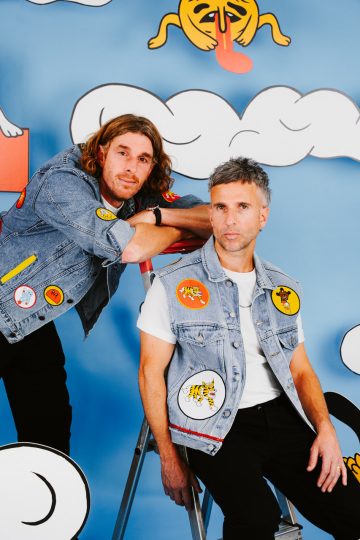
 The Hoosiers deliver signature dabs of eccentricity, colour and play with such consistent buoyancy, the optimism of the late 2000s somehow finds itself firmly nestled in their most recent of releases. Their latest endeavour, a sprawling, beautifully anxious exploration of the world we now live in, aims to bring a shade desperately lacking from the modern palette – Compassion.
“It’s a thimble of water on a raging inferno, but it’s gotta help,” says lead vocalist Irwin Sparkes. Raging or not, in exchange for precisely 34 minutes of your time, you can watch as warm paranoia melts into the cool tones of a soothing falsetto.
As we approach the twentieth anniversary of The Trick To Life, it’s hard not to wonder if the band have found it – it should surely look different, coping in a new shape. The multitude of human changes that have occurred in the last two decades, the last five years in particular, are impossible to ignore, which is why Compassion must surely have been painted differently. “In some ways there’s a lot of similarities you know, because I think Al and I are really aware of how much we have to learn still,” Sparkes adds to the notion that these two projects might be coming from different creators onto different canvases. However, for the two of them, the creative process has remained much the same, still determined to make music with purpose and something real to say. “Music is still incredibly magical for us… there’s still a real, genuine sense of discovery,” he adds, “it’s amazing fitting chords together like a big, beautiful jigsaw puzzle.” The result on this album is precisely that, a project that tackles this idea of putting things back together, starting with the basics of empathy and consideration. Evidently through confusion, pandemics, social media crises and political upheaval, the trick to life IS compassion.
It must be said that the sound of the album is not in any way preachy, in fact it’s the opposite. A gentle hand that rests on your shoulder (‘Don’t Hang Your Head’) or spins you out of your head and onto the dancefloor (‘Jigsaw Heart’). All of this is of course splattered with bouncing drums and signature swing so that if you must think, you may at least dance while you do so. “I’d say we’ve really gotten close to the source of recapturing kind of this playful, fun quality,” Sparkes glistens. The overall sound is, as he puts it, “so Hoosiers.”
In a world of samples, sequels and remixes, it is undeniably refreshing to hear something that simply sounds like itself. Across their six projects, the band have managed to curate a recognisable character for their music, while still finding new ways to surprise, intrigue and blend. “What I think The Hoosiers do is make sort of life-affirming, positive, upbeat pop songs and we’re proud of that. There was a time when I think we maybe rebelled against it a bit… but I think we’re really happy with who we are now,” Sparkes reflects on the comparative processes of creation. There’s a maturity and intention throughout their latest that really does feel like the sound of a band being enthralled by their own convictions. As Sparkes later deduces: “It’s pop in a, dare I say, wonderfully sophisticated sense.”
The writing process itself appears just as assured as the final output. During our conversation, Sparkes cites the suggestion from Guy Garvey that songwriters only have two or, if they’re lucky, three songs in them and then they spend their career rewriting those. It’s an idea that The Hoosiers have tried to refute, if only to keep themselves invested if nothing else. Sparkes explains how: “[‘So High’] was the product of a cowrite that we felt was such an infectious song and the rhythm section with Al and Layton, our bassist, was the closest we’ll come to funk, and that was too delicious a little departure for us to not explore.” At the centre of Compassion, in many ways, is the idea that if it wasn’t fun to create, and it doesn’t entertain its makers, it serves no purpose at all. There is a sense of perpetual newness, in sounds and revelations that strikes you as incredibly important to the overall intention. “We’re always looking for something lyrically or musically that is a surprise,” Sparkes finalises.
Although, familiar hues still made their way in, balanced out by experimentation and discovery, as the actual album was recorded in the span of just five days however, some of the material dates back as far as 2003. Sparkes smirks: “I hate throwing away good ideas!” He explains with such intense sincerity the pleasures of finding “which songwriting key will undo the lock,” that you half expect his dialogue to materialise as a lightbulb over his head or a vibrant flashback to the moment it all just clicked.
Moving on to the concept of these eureka moments finally belonging to the wider public, Sparkes is firm in the belief that: “It’s so costly an endeavour, to write and then record and then release music, that we wanted it to be for something.” Some music isn’t supposed to meander, to say nothing. Not now. Furthering this, he adds that: “It’s so interesting removing ourselves from the process and hearing what [the fans] relationship is with our music.” In many ways, it is the fans who truly breathe life into a project. Isn’t a meaning more successful when it’s understood, appreciated and carried forward? Or should the acceptance of fans be nothing more than the blush in your cheeks when you yourselves are so convinced by the importance of what you’re delivering?
Sparkes reflects briefly on the significance of fandom, speculating where this demographic might have found them: “We’ve got this wonderful group of people who are just so different from each other, so many different walks of life, and our demographic is still ridiculously young, which I find surprising. I think a lot of them were listening to our album in utero or the first three years of their life. We are their first memory of sound because we are one of the fortunate benefactors of being one of the last bands to sell CDs that made it into people’s homes.” Accepting this probability seems pertinent to the new album as the responsibility to then nurture that youth, seems overwhelmingly present. “We wanna really say something with our music now and this is Compassion the album,” Sparkes concludes.
When asked what he hopes the single takeaway be from listening to Compassion, Sparkes decides that: “I think one of the highest faculties of music is its ability to transport you,” he begins to describe that moment when you press play and suddenly it feels as if someone has reached into your very synapses, stolen thoughts you didn’t know you had, “perhaps it helped you articulate something you didn’t even know you were feeling,” he whisks. “It has that effect on us to have made it so we’re hopeful it does for others.” The sentiment is delivered so earnestly, you can’t help but hope for that too.
If you’re wondering whether Sparkes has experienced this musical enlightenment in anyone’s artistry but his own (which he bashfully admits to listening to “over 500 times”), the answer is yes. “I find myself listening to a lot of contemplative film scores,” he enthuses, which seems befitting for the days surrounding an album with such obvious cinematic qualities, “… that and Kendrick Lamar.” The two pillars of modern masculinity, Kendrick and cinema.
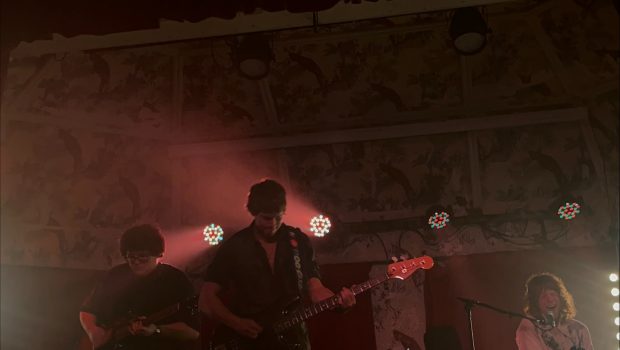
When conversation flips to live music, Sparkes is visibly avid. “I would say it’s one of the most rewarding parts of the job, still, after 20 years of doing this professionally,” he begins. He continues that: “You’re really reminded of how music does bring us all together, it’s a sense of community through something utterly ethereal and ephemeral because it’s live and then it’s gone,” the last part of this is accented by a snap of the fingers that tucks away the memories. With a discography so rich and so extensive, choosing a setlist for The Hoosiers must emulate trying to choose what to watch when you’re currently subscribed to every streaming service your telly can stomach. Sparkes smiles: “It’s a bit of alchemy, it’s a real joyful process putting together that setlist and we don’t always get it right, we’re constantly refining.” Note here just how many times his answers have made reference to joy, play and pleasure – like a child just as contented by seeing their work on the fridge as they would be honoured in a gallery. The happiness is in the making.
Circling back to setlists, Sparkes says that it happens in two ways: with their old music, which remains firmly cemented in the rotations of any respectable indie club, and he acknowledges is “the reason people bought their tickets” and the new music, the tasters that they hand out to pass “a real time litmus test.” Naturally, where there’s room, a few covers are added in for extra flair and relevance. I am told their recent favourite of this ilk is Chappell Roan’s ‘Pink Pony Club’ which Sparkes threatens he could talk to me about the inclusivity of for ages. Whatever is on offer, people are turning up. For the old, the new, the borrowed and the true. “The fact that that still happens for us is a joy,” Sparkes grins.
It’s obvious how much the support means to the band, whether that be from a longtime fan or someone who simply found that CD in their house on a quiet day. Sparkes’ appreciation permeates most of all as he beams: “They’ve now got a relationship with something you’ve made, it’s so richly rewarding,” an observation made even more endearing as he candidly adds that: “We’ve been a little too weird for the mainstream and a bit too mainstream for the weird.” It would seem they’ve found their sound and their tribe.
Not only that, but they are keen to help others find theirs. The band are ambassadors for Music For Youth and SANE which are charities intent on providing support for young musicians in the form of performance opportunities as well as access to instruments and mental health support respectively. “Music for youth was such an obvious partner in that regard because their whole ethos is about trying to get an instrument in the hand of any school kid regardless of background, ethnicity, gender whatever,” Sparkes articulates the invaluable efforts of these charities, particularly as grassroots venues succumb to financial strain and collapse.
Both affiliations exemplify how the band are able to act out compassion, live and in technicolour, as opposed to merely singing about it.
In the spirit of this, I ask Sparkes the singular act of compassion he would show to himself at any age he felt he needed it most. His answer: “Maybe when I was 16, to know that I am enough, that would’ve been life changing I think.” I am enough. Three words so unassuming, they’d fit in a thimble.
Compassion is released on 15 May 2026