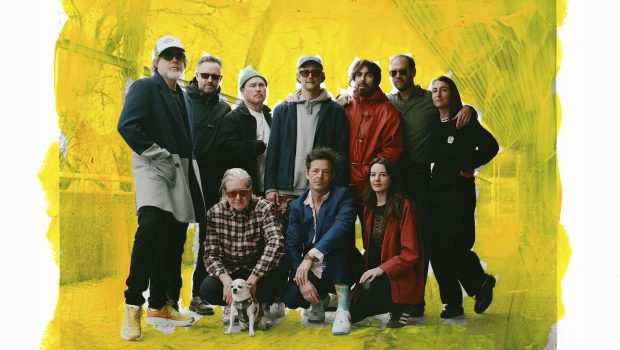
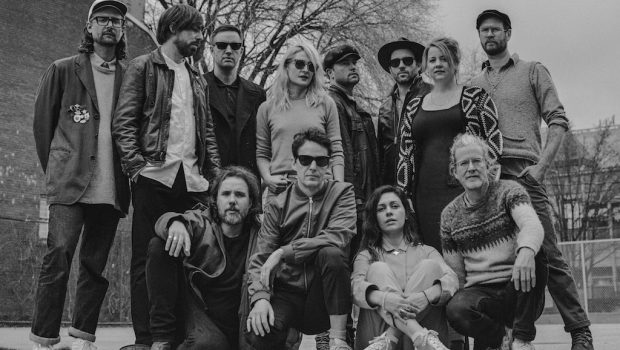
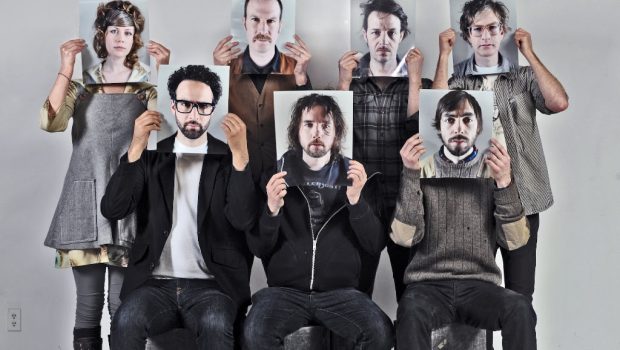
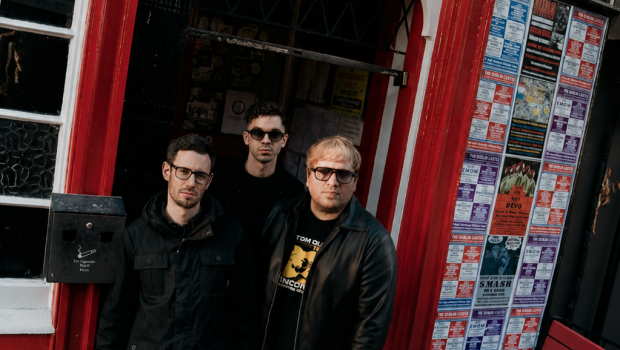
 At the turn of the century, when pen and paper fell to the rise of technology, a new sound emerged, blurring the line between analogue intimacy and digital noise. Broken Social Scene have never operated like a conventional band. Formed in Toronto in 1999 by Kevin Drew and Brendan Canning, they exist more as an ever-developing musical ecosystem than a fixed lineup, with contributors often ranging from six to nearly twenty members. Emerging from basement recordings into expansive, unpredictable live performances, Broken Social Scene built a reputation on spontaneity – each show shaped by circumstance, collaboration, and a refusal to ever sound the same twice.
Broken Social Scene’s sound sits at the intersection of raw guitar energy and intricate, experimental layering. Drawing on the fuzzed-out immediacy of Dinosaur Jr. and Built to Spill, they balance distortion with melodic clarity, while bands like Tortoise inform their textural ambition. Their early work, including collaborations under KC Accidental, helped shape a dense “wall of sound” aesthetic that defined early 2000s indie. Yet influence for BSS isn’t static, it’s cumulative. Each returning member brings new influences, meaning the band’s identity constantly evolves, absorbing shifting cultural moods while maintaining a core commitment to emotional immediacy and collective expression.
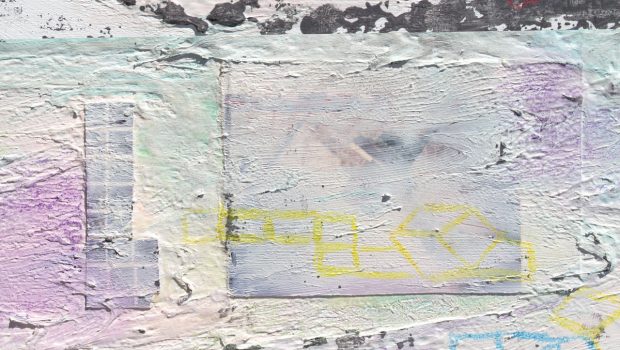
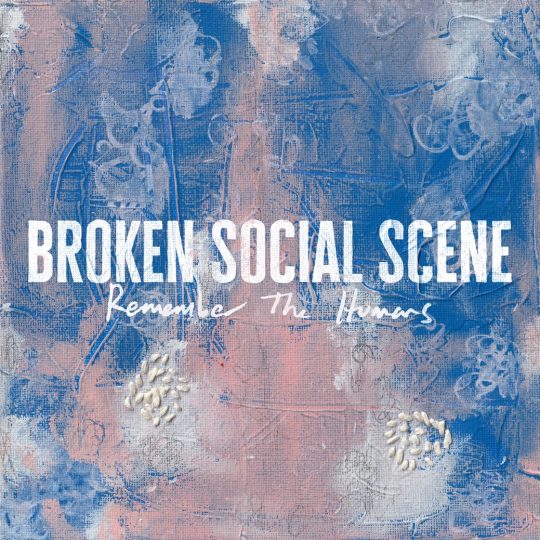
With Remember The Humans, Broken Social Scene re-emerge at a moment that mirrors their own tension: overstimulated yet emotionally distant. Reuniting with producer David Newfeld – the architect behind You Forgot It in People – the band reconnect with the expansive, layered sound that first defined them. The arrangements feel immersive yet grounded, with melody cutting through the density like a guiding thread. True to form, leadership shifts track to track, allowing voices like Hannah Georgas and Lisa Lobsinger to take control, reinforcing the album’s central idea: that music, at its core, is a shared human act.
Not Around Anymore opens with a lightness that feels almost instinctive, carried by a soft flute line that drifts in and out like a passing thought. There’s a warmth to the layered vocals – one steady, one quieter and rougher around the edges – that gives the track a sense of intimacy without ever weighing it down. The track moves steadily, allowing its melody to settle into something quietly reassuring. Even as it dips into a slower outro, there’s no real sense of loss, just a gentle shift in energy before it finds its footing again. It’s the kind of song that hums into the background of your day, only to linger longer than expected.
Only The Good I Keep unfolds patiently, opening with the sharp click of drumsticks before settling into a rhythm that feels both restrained and restless at the same time. Led by soft vocals, the track carries an intimacy that never feels overly delicate, balancing comfort with quiet tension. Midway through, the instrumentation subtly shifts, tightening around the vocal performance and creating a heavier emotional pull without disrupting the tempo. It’s in quieter moments when the instruments briefly fall away to leave the voice exposed that the song hits hardest.
Mission Accomplished (Kingfisher) immediately moves in a different direction, trading introspection for momentum. There’s something undeniably nostalgic about it, without feeling sentimental, but in the feeling of movement it creates – like watching scenery blur past from a car window late at night. The percussion drives the track forward constantly, giving it an energy that feels built for live performance, a rhythm that instinctively makes you tap along. That contrast is what gives the song its weight: upbeat on the surface, but carrying something more reflective underneath.
The Call feels expansive from the get go, like standing on the edge of a mountain after a long climb. The dual vocals create a push and pull, never settling into a single perspective, which adds to its sense of movement. There’s a sharpness to the rhythm, particularly in the chorus, that cuts through the otherwise weightless atmosphere, grounding it just enough. Its lyrics lean into abstract and poetic, hinting at transformation without ever defining it. After the bridge, the track briefly dissolves, only to rebuild itself instrument by instrument, re-emerging to find their places again.
Relief moves with a breathless momentum, maintaining a fast pulse that rarely loosens its grip. The layered vocals weave around each other rather than competing, while the first verse gradually climbs higher and higher, creating the feeling of pressure steadily building beneath the surface. Even in its softer moments, the song never slows down, it simply shifts shape, easing tension before throwing itself back into motion. There’s something whimsical about the track despite that urgency, like movement without destination, all open skies and blurred colour. When the instrumentation crashes back in, it feels immediate and alive, ending abruptly before the momentum can fully settle.
And I Think Of You acts as a comedown after the restless energy of the previous track, slowing everything into something more restrained and reflective. The arrangement constantly feels ready to erupt, which gives the song much of its emotional weight. Layers of instrumentation blend together with orchestral precision, each element supporting the other so seamlessly that the track begins to feel almost choral in places. As it progresses, the song gradually swells in volume rather than pace, becoming increasingly consuming while still holding itself back. By the closing moments, repetition turns almost desperate, before the track quietly collapses back into itself on a single lingering note.
This Briefest Kiss leans into a slower, heavier, and far more immersive experience, building tension without relying on sheer volume. Its opening feels conversational, instruments responding to one another in looping phrases while wordless vocals drift through like another instrument entirely. The delayed arrival of the lyrics makes the title feel significant, as though the song has been circling around the feeling before finally naming it. Throughout, the instrumentation rises and falls in waves, swelling into intensity before pulling back into near silence. Even at its most expansive, there’s exhaustion etched through it, capturing the strange closeness between comfort, longing, and emotional fatigue.
Life Within The Ground continues the album’s slower, more immersive stretch, but carries a distinctly different emotional atmosphere. The shared vocals soften the edges of the track, blending together in a way that feels less conversational and more intertwined, as though both voices are reaching toward the same distant point. There’s a dreamlike quality running throughout, created by the repetition and consistency of the arrangement rather than dramatic shifts in tempo or intensity. Even at its most restrained, the song feels emotionally loaded, lingering somewhere between hope and loss without ever fully settling into either.
Hey Amanda begins in a quieter, more restrained space, built on minimal instrumentation that lets the interplay between voices take center focus. As it unfolds, it gradually expands without ever becoming overwhelming, maintaining a steady sense of flow between its shifting sections. The contrasting vocal lines add texture rather than tension, giving the track a layered emotional depth. There’s a looseness to its structure – transitions feel almost seamless, with little separation between verse and chorus – which allows it to move with a quiet confidence.
Paying For Your Love strips back into something more grounded and intimate, opening with a guitar-led arrangement that leans closer to acoustic than many of the album’s denser moments. It sounds familiar, carrying a loose, heartland-rock warmth that feels almost nostalgic without becoming overly polished. The repeated title circles through the track with a hypnotic quality, less like a dramatic declaration and more like a thought replaying endlessly in someone’s head. Just before the bridge, the instrumentation falls away almost completely, quietening the atmosphere before gradually rebuilding itself again. Even in its fuller moments, the track never loses that sense of vulnerability.
What Happens Now settles into a slower, melancholic space, driven by layered female vocals that feel fragile enough to unravel. Rather than relying on dramatic shifts, the song stays consistent in mood, maintaining a late-night stillness that feels suspended somewhere between exhaustion and reflection. Midway through, the percussion briefly grows more urgent, drums fading in and out as the track momentarily pushes itself forward, but the momentum never fully takes hold. Instead, it retreats back into its quieter form, resisting catharsis entirely.
Parking Lot Dreams closes the album in its most understated form, built around hushed vocals and soft acoustic guitar that feels whispered into the darkness. The arrangement stays restrained throughout, never dramatically swelling or collapsing, allowing the track to exist in a gentle state of suspension. There’s something deeply reflective about its stillness, as though the album is winding itself down rather than reaching for a grand conclusion. By refusing a final dramatic moment, the track instead leaves behind a lingering calm, ending the record not with resolution, but with quiet acceptance.
Broken Social Scene: Remember The Humans, out 8 May 2026 (City Slang)
Watch Broken Social Scene’s ‘Not Around Anymore’ music video now:
Broken Social Scene – Not Around Anymore