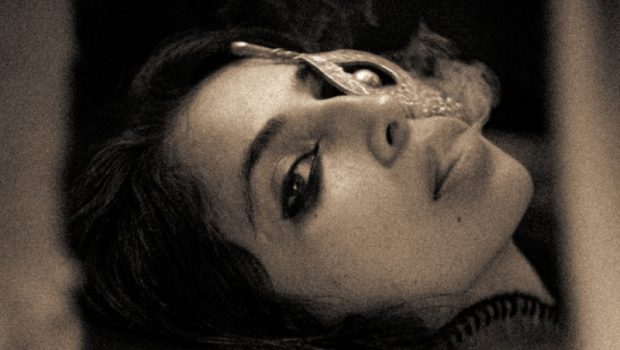
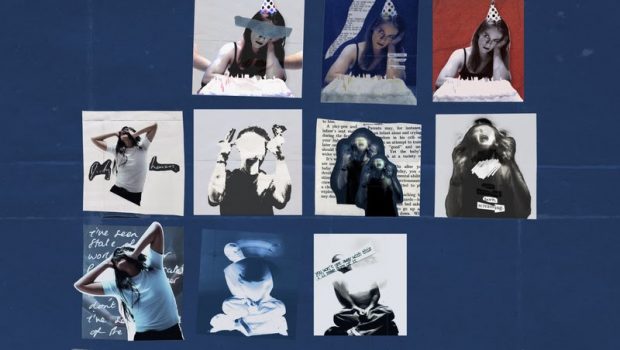
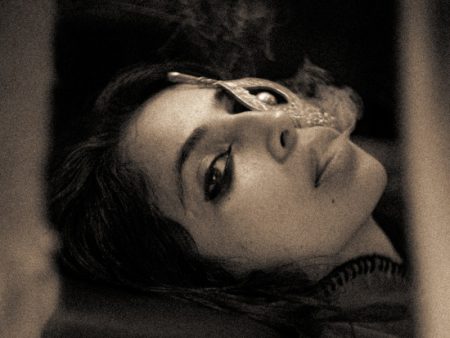
 At heart, ‘Khudgarzi’ is an album about the patriarchy and its demands upon women. More specifically, it reflects Sheherazaad’s fascination with the notion of the so-called Khudgarz Aurat, The Selfish Woman. It is an accusation that she heard levelled at women throughout her childhood, at those who were eccentric and desired autonomy. In stories, they would invariably meet a terrible end. Writing the album in the wake of a broken engagement, it caused her to reflect on conventional notions that she had not been able to give enough to a partner, a family and their expectations.
Consequently, ‘Khudgarzi’ acts as a ten-song oral archive populated by storytellers, survivors and witnesses. The characters range from goddesses to murderers and there is a similar range in the composition with lyrics predominantly in Urdu but at times Shererazaad also slips into Tamil and English. Musically, it expands her dystopic folk-noir sound to include instruments from the Hindustani, Arabic, Carnatic and Turkish tradition – including tanbur, santoor, veena, rabab, ghatam and gungaroo – as well as weather recordings, breaths, echoes and sounds from the animal world. There is an enticing chaos to the album, reflecting the presence of over 30 musicians and recording taking place between Brooklyn, San Francisco and London, with other contributions arriving via Istanbul, Islamabad and Trivandrum.
The record’s unrelentingly dark air of mystery is set up with the opening track, ‘Qatil’ (Murderess). Sheherazaad’s voice floats menacingly and eerily as the narrator reflects on her compulsion to kill. The song’s arrangement is spare, synths drifting around a percussive array of tabla, Kanjari, Ghatam and Mridangam while Sarathy Korwar’s muttered additional vocals add to the atmosphere.
To compose ‘Pakeezah’ (Pure One), Sheherazaad walked around the ruins of Lucknow, India and stayed at a grandiose hotel full of nostalgia for the city’s former glories to conjure the story’s mood of a woman who initially harbours delusions of purity. The song reflects her relationship to purity culture having grown up in a caste/oppressor background. The way her voice is emphasised by the use of double bass, cello and violin, all courtesy of Alan Keary (Shunya), makes it especially captivating.
‘Registaan’ (Desert) uses minimal, repetitive guitar alongside her voice and sounds of nature to conjure a thoroughly unnerving trip into the wilderness for a woman seeking her last chance of freedom. The one song with a significant amount of English is ‘Gulukara’ (Songstress) which is darkly seductive as her voice tangles with double bass, creaking violin lines and harmonium. Lines that could be construed as a manifesto are delivered in Urdu and translate as “I have a singular goal / I will fight this world / with my voice… these musical gatherings are my revolution.” The song also features notable vocal contributions by rising South Asian singer, Irfana, an inclusion that Sheherazaad sees as a deliberate political choice at odds with the album’s theme of selfishness as for too long women were taught that there could only be one of them in the spotlight.
Understandably, ‘Mard’ (Man) is creepy. A study of the male gaze decorated with tabla and the darkest synths, it urges “let’s steal a bit of their manhood today.” With a sense of mischief, the track could be described as the record’s most psychedelic number is called ‘Haqeeqat’ (Reality). Musically, it sets Veena (a traditional Indian stringed instrument) alongside double bass, cello and violin to create an otherworldly sound with the final lines “the magic carpet will once again become / a pumpkin” indicative of its discombobulating nature.
On an album that is grimly atmospheric, ‘Andhera’ (Darkness) is its pinnacle. Combining lute-like traditional instruments, rabab and tanbur, with brooding synths and vocal ululations, it could be the soundtrack to a spaghetti western and horror mashup. While ‘Zeher’ (Poison) is doom-laden and concludes with the question “is this poison? / or your medicine?”, its selection of synths and percussion gives it a dynamism that contrasts with the fragmented and tormented ‘Kohinoor’ (Diamond) before the album fades out with the instrumental reprise ‘Haqeeqat II’ (Reality II).
‘Khudgarzi’ is a convincing mood piece full of mystery and contradictions, ‘One Thousand And One Nights’ for the most gothic heart, marking Sheherazaad as a distinctive talent.
Sheherazaad: Khudgarzi – Out 20 November 2026 (Erased Tapes)

I was editor of the long-running fanzine, Plane Truth, and have subsequently written for a number of publications. While the zine was known for championing the most angular independent sounds, performing in recent years with a community samba percussion band helped to broaden my tastes so that in 2021 I am far more likely to be celebrating an eclectic mix of sounds and enthusing about Made Kuti, Anthony Joseph, Little Simz and the Soul Jazz Cuban compilations as well as Pom Poko and Richard Dawson.