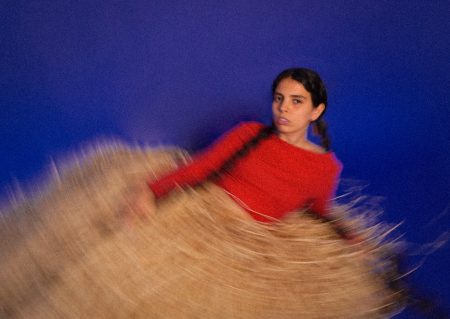
Ana Lua Caiano photo by Joana Caiano
The latest album from Ana Lua Caiano, ‘Devagar Que A Vida É Curta (Slowly as Life is Short)’ is an absolute delight. It is instantly accessible despite featuring a range of styles and instrumentation that suggest it could be overwhelinly jarring and challenging. The record expertly brings together traditional Portuguese music with electronics, piano, layered vocals and everyday sounds including washing machines, hammers and drills. Via email, she answered my questions about her musical background, song construction, the album’s themes and performing as a one-woman show.
As an artist who is new to me, I like to ask what were your early experiences of music both as a listener and then subsequently performing it? This feels especially relevant in your case as there are so many different styles of music mixed together on.
Music has always been a big part of my life. I remember going on car trips with my parents when I was very young, and we would always listen to artists like Zeca Afonso and Sérgio Godinho two very important Portuguese songwriters. To this day, these musicians and their albums are still very important to me.
I started learning piano when I was six years old and continued until the ninth grade. After that, I moved into the world of jazz, where I started exploring the voice as an instrument. Between the ages of 16 and 21, I was part of four or five different bands. I loved writing songs, and my music was very much inspired by traditional Portuguese sounds and by the songwriters I had grown up listening to. Then, shortly before Covid, I started exploring other kinds of music. I began experimenting with synthesizers, discovered musique concrète, and found completely different musical worlds from the ones I had known until then. I started listening to artists like Portishead, Laurie Anderson, Björk, and Silver Apples.When Covid hit, I had all these new musical ideas in my head, somehow mixing with my more traditional Portuguese musical influences. And that was when my solo project was born. Making music, experimenting with sounds, and exploring everything I had around me became a way of dealing with the solitude of that period.
Fado is the traditional Portuguese music that people in Britain are most likely to be aware of. However, from what I understand, your music uses other types of local traditional music. Could you explain more about that?
Traditional Portuguese music is music that was passed down orally from generation to generation. Unlike fado, this kind of music was not considered a prestigious or sophisticated art form. It was sung in the fields, in people’s homes, and during everyday activities. It was music that belonged to the community, passed from one person to another, without anyone really knowing who had originally created it.
I have read that you were in a couple of bands prior to releasing your own music. Could you tell us about those experiences and the differences between that and making music on your own?
It’s very different being in a band and making music on my own. In most of the bands I played in, I also composed, but the process of transforming a melody into an arrangement was always a collective experience. I would bring ideas, like piano riffs or bass riffs, but most of the music was developed together as a group, which was a very enriching experience!
These bands were more traditional in the sense that we mostly played traditional instruments. When I started producing music on my own, using a computer, it gave me the opportunity to explore sounds I hadn’t experimented with before: the sound of keys, glasses, a garbage truck… I started using everything around me to make music.
In reality, I only started making music alone because of Covid. I couldn’t play with my musical groups anymore due to the restrictions. Maybe I could have explored those same things with a band, but almost overnight, the context completely changed. And for the first time, I found myself exploring music on my own.
How do you go about constructing your songs? Do you start each time with a lyric or with a rhythm or a melody?
Usually, a song starts with a melody. And most of the time, these melodies come to me during quiet or even “boring” moments! When I’m waiting for the bus, when I can’t sleep… It’s in those moments that my mind has the space to come up with musical ideas.Whenever that happens, I record them on my phone. I remember one time when my phone had run out of battery, so I tried to figure out the musical intervals and write them down. I also kept singing the part I liked in my head for a really long time, just so I wouldn’t forget it! But musical ideas usually come at the most inconvenient times. It’s actually quite difficult for them to appear when I’m in the studio. After recording these ideas, I go back and listen to all those recordings, choose one, and start building a rhythmic pattern using whatever objects and instruments I can find around me. I gradually create a musical base with lots of different layers. Sometimes, out of a three-minute recording, only five seconds are worth keeping! And I start exploring those few seconds, developing the melody and seeing where it takes me. The lyrics are usually the very last thing I write.
On the new album, the songs have a consistent theme that reflects on life and mortality. Was this a deliberate decision? For example, did you have other songs written that did not fit with these ideas or was it something that emerged subconsciously?
It was something that happened subconsciously… The songs were more or less written during the same period, so maybe that’s why they all ended up exploring the theme of death in different ways: death from overwork, the death of someone who wanted to return to their home country but passed away before they could, death in war… It’s quite a heavy album in that sense, but I like creating contrasts, making energetic music around such heavy subjects. In a way, I want people to dance their worries away, to dance death away.
The videos for the two singles released so far from the album are excellent. Could you tell us about the process of making them?
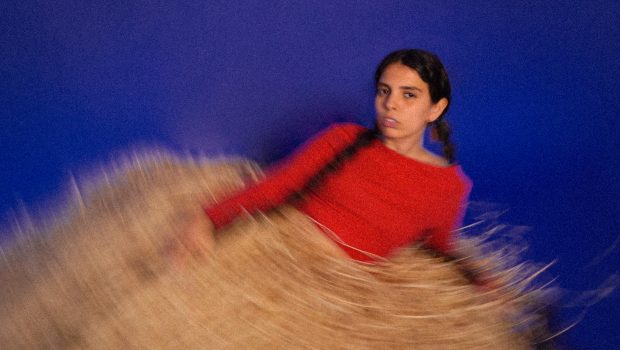
Videos are very important to me. I see the visual side of music as an extension of the music itself. Coming from an arts background, all the different elements of a song, from the music to the album cover and the video, are really important to me. During Covid, while I was composing music, my sister Joana Caiano, who is a filmmaker, started creating videos for my songs. She began developing this visual universe that has now become inseparable from my music. We’ve continued collaborating ever since, and she brings so many new ideas and different perspectives to the songs. I like the videos not to be an exact reflection of the music, but rather a parallel universe that adds new layers and different meanings to it. Luckily, we now have a much bigger team that helps bring everything together and makes the whole process so much easier! In the beginning, it was just the two of us!
I particularly enjoyed the humour in the video for “Uma Vida A Menos”. As someone who has spent many years working in office jobs, it made me wonder whether you are able to make a living from music and, if not, how you go about subsidising releasing records and touring?
Fortunately, over the last couple of years, I’ve been able to make a living from music. Of course, I still rely on some financial support to create music and go on tour. This album was supported by SPA, and the tour I’m doing this year in Portugal and next year across Europe is subsidised by DGARTES. It would be really difficult if all that investment had to come from me. Unfortunately, there have been years when I haven’t managed to get this kind of funding, but when it happens, it makes a huge difference.
You have a tour lined up this winter. What can audiences expect from your live performances? What are the challenges of performing live as a solo artist, especially when your recorded music has such an array of instrumentation?
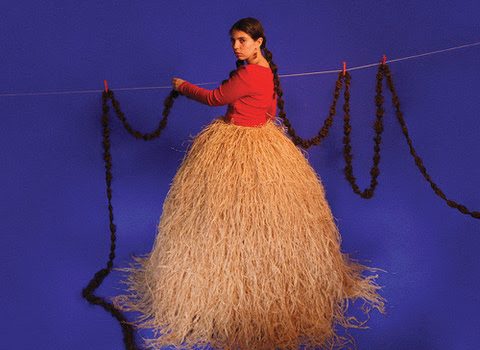
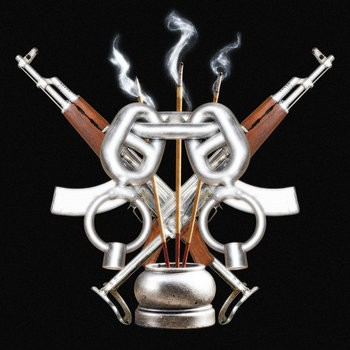
For this tour, I’ll be bringing a more performative element to the stage, inspired by the album cover. I wanted to bring the visual worlds of my music videos and photographs into the live performance, so I’m really excited about that! Musically, I perform as a one-woman show, using a loop station to build the songs live on stage. I combine traditional Portuguese instruments, like the adufe and tréculas, with electronic instruments, such as the MicroKorg and Arturia synthesizers.
What are your future plans?
The only plan I have is to keep making music. It’s something I really love doing, so as long as I can keep composing, I’ll be happy!
Ana Lua Caiano will be touring Europe in early 2027. Her only UK date is at London Jazz Café on 17 February.
Lua Caiano – Full Performance (Live on KEXP)

I was editor of the long-running fanzine, Plane Truth, and have subsequently written for a number of publications. While the zine was known for championing the most angular independent sounds, performing in recent years with a community samba percussion band helped to broaden my tastes so that in 2021 I am far more likely to be celebrating an eclectic mix of sounds and enthusing about Made Kuti, Anthony Joseph, Little Simz and the Soul Jazz Cuban compilations as well as Pom Poko and Richard Dawson.