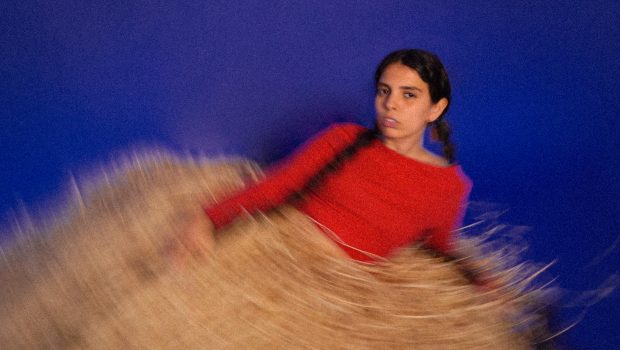
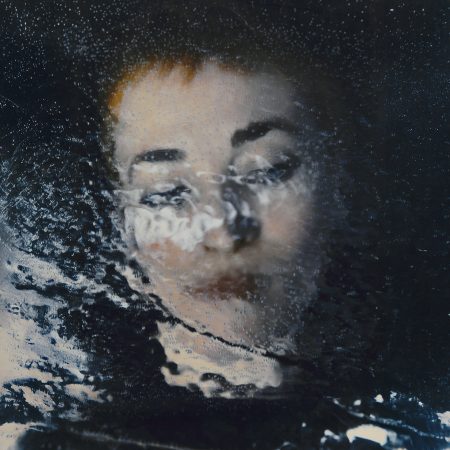
 For the third time in four weeks, I find myself sat reviewing an album containing a version of ‘Hares on the Mountain’. Following its appearance on new releases from Flora Hibberd, and Johnny and Lillie Flynn, it now appears on the debut album from Radie Peat, the vocalist with Lankum. It is an almighty coincidence that illustrates a wider point about an unlikely musical development in recent years, the increasing popularity and critical acclaim for artists reinterpreting traditional songs. While some of these songs may be centuries old with settings and activities that feel alien in the contemporary age, the relationships and power structures that select songs describe undoubtedly have a modern-day relevance.
Lankum was born out of Irish traditional music sessions and has been at the forefront of renewed interest in folk songs by bringing to them the intensity and sonic textures of artists like My Bloody Valentine Sun OOO))). ‘No Human Tongue Can Tell’ provides a showcase for Peat’s distinctive voice – passionate, nuanced and with a pronounced Irish brogue. Her vocals are not the only area of continuity as again James ‘Spud’ Murphy is in the producer’s chair and on a couple of tracks Lankum’s Cormac MacDiarmada features on strings. Opening with the aforementioned ‘Hares on the Mountain’, Peat’s version is more subdued, flattening out the song’s jaunty melody. The strings and her voice are perfectly controlled, almost sombre in their portrait of uneven gender dynamics in courtship but in its ending which emphasises personal growth, this interpretation illustrates the song’s proto-feminist qualities.
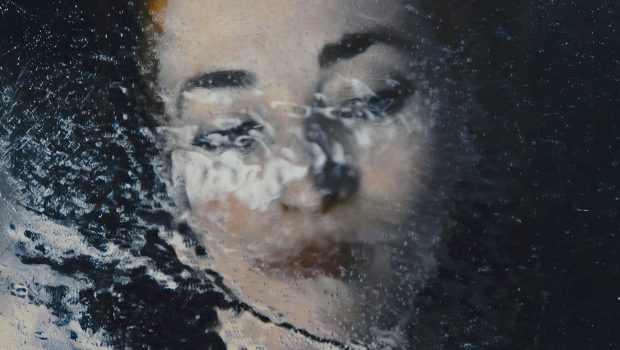
‘The Moon and Stars’ is my favourite demonstration of how the album brings together the traditional and the contemporary. It is based on “The Maid’s Lament /Maid’s Lamenting” (Roud 1684) and while Peat has taken liberties with the lyrics, she keeps the ballad’s veiled references to unwanted pregnancy and abortion with the herb Rue being a potentially fatal means of securing a termination. Peat’s voice is at its most soaringly powerful, Eleanor Myler’s drums give it great momentum and the use of synth as an insistent earworm makes for a cohesive and rewarding clash between eras.
‘Willow Garden’ sees her revisiting a song that appeared on Lankum’s ‘Between the Earth and the Sky’ and in some versions has been named ‘Rose Connolly’ after the song’s victim. It is an Appalachian murder ballad which, among other interpretations, served as the B-side to Nick Cave’s ‘Where The Wild Roses Grow’. The theme of unintended pregnancy recurs although in this instance the protagonist’s terrible solution is to murder his sweetheart before suffering retribution. Against a backdrop of fingerpicked guitar and subdued cello, Peat’s performance is tenderly solemn in its depiction of gendered violence.
‘Luisne’ is the one instrumental track. Its title translates as glow or glimmer and it is a somewhat chilling soundscape that conjures images of winds and light peeking through misty landscapes. It leads into another Appalachian song, ‘Same Old Man’, a tune that has been covered amongst others by two artists with very individual visions, Karen Dalton and Joanna Newsom, but unquestionably Peat makes it her own. Alongside its spare but sharp arrangement and background drone, she captures the protagonist’s despair and emptiness.
A comparatively recent song, ‘Dark Horse in the Wind’ was written by Irish poet and folk song collector Liam Weldon in 1966 on the 50th anniversary of the Republic’s formation. It is delivered as a funereal lament for missed opportunities as Peat’s voice stretches as she bids the title’s horse to rise. With all the visionary leaders killed in the Easter rising, the mess that was left is captured in the lines, “in the grief and hate our motherland her dragon’s teeth has sown / now the warriors from the earth have sprung, to kill and maim their own… for the one-eyed Balor still reigns king, in our nation of the blind.”
Found by John Francis Flynn in a book of traditional songs, disturbingly in the section for true love, ‘Still I Love Him’ catalogues a woman’s continuing devotion to her man through his escalating bad behaviour which culminates when “he comes down our alley and whistles me out / and when I get out there, he knocks me about.” With a minimalist backing, it is an especially fine vocal performance, rising and falling, aided by Katie Sullivan’s additional vocals, in its hushed and haunting nature conveying the awfulness of the narrator’s predicament.
On ‘Bonnie Boy’, Peat acknowledges Shirley Collins’ version of the song, another track on which the narrator dabbles with unfaithful men before asserting her own independence. The tune is at its most spellbinding where the banjo and other instrumentation drop out leaving her voice unaccompanied.
Throughout, ‘No Human Tongue Can Tell’ has been content to unfurl at a glacial pace with five of its first eight tracks extending beyond the six-minute mark but this is taken to a compelling extreme on the nearly thirteen-minute closing triptych, ‘Cailín Deas’. The first section is taken from a song called ‘Cailín Deas ag Crúite na mBó’ which translates as ‘nice girl milking the cows’ and is followed by ‘When I Was A Young Girl’, an American ballad about a woman dying of syphilis, and an old-time tune, ‘Sally in the Garden’. Peat’s voice stretches to ring every bit of emotion from the song accompanied by concertina and strings. It completes a richly textured and nuanced record that gives excellent evidence of why in their new forms traditional songs are still relevant in the 21st Century.
Radie Peat: No Human Tongue Can Tell – Out 13 November 2026 (Rough Trade Records)
Peat – The Moon and Stars (Official Video)

I was editor of the long-running fanzine, Plane Truth, and have subsequently written for a number of publications. While the zine was known for championing the most angular independent sounds, performing in recent years with a community samba percussion band helped to broaden my tastes so that in 2021 I am far more likely to be celebrating an eclectic mix of sounds and enthusing about Made Kuti, Anthony Joseph, Little Simz and the Soul Jazz Cuban compilations as well as Pom Poko and Richard Dawson.