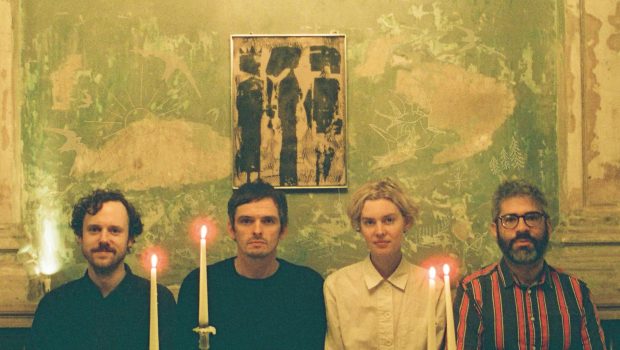
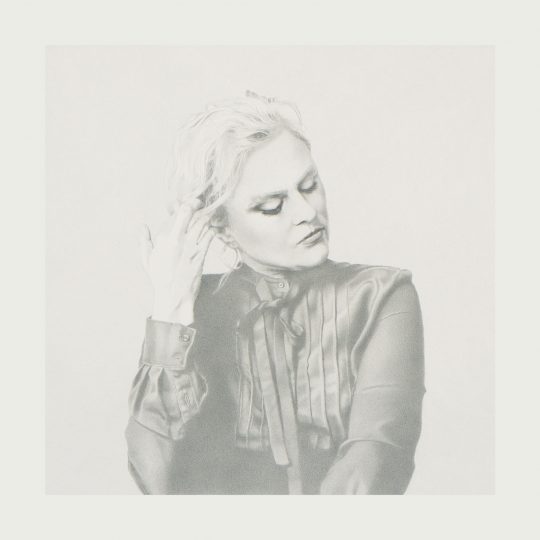
 Björk once described Ólöf Arnalds as “somewhere between a child and an old woman.” Clearly, this was not intended as an insult and it neatly encapsulates the charms that she brings to her fifth album, ‘Spíra’, which translates as Sprouts. Sometimes those polar opposites in age have similarities. The honesty and openness of childhood can return in old age when the cool pretences of youth have melted away. While an infant can often surprise with precocious insights, ‘Spíra’ also contains the sage wisdom of age. For a record that unpeels its feelings, it is appropriate that its musical stylings are stripped back. After two more expansive albums ‘Sudden Elevation’ (2013) and ‘Palme’ (2014) sung in English, her current release sees her singing exclusively in Icelandic. She is joined on bass and guitar by husband and producer Skúli Sverrisson who has acted as Laurie Anderson’s musical director and collaborated with David Sylvian, Ryuichi Sakamato and Arto Lindsay while Davíð Þór Jónsson who completes the trio on piano and guitar has worked with a panoply of jazz artists. It is an album that develops themes of nature and the seasons, love, family and forgiveness.
A classically trained violinist and singer who first came to attention in the touring version of múm, Arnalds has a distinctive soprano voice which makes the most immediate impression listening to opening track, ‘Heimurinn núna’ (Our World Now), which is backed by intimate fingerpicking guitar where even the movement along the frets is audible. A love song set in midsummer which also hints at themes of neurodiversity, the playful lyrics mess with numbers (“if we put two with three / what do we then have / but your birthday” and “a thousand and two nights.”) There is a fleeting moment where the vocal melody suggests she is about to burst into the chorus of Simon and Garfunkel’s ‘I Am A Rock’.
Joanna Newsom is the most prominent vocal reference point for Arnalds and this is best evidenced on ‘Von um Milde’ (Hope For Grace) where her voice twists and ebbs through the shifting chords and the song’s structure shares Newsom’s inclination for continuous narratives rather than a verse-chorus layout. A song about forgiveness being a state of mind rather than a one-off event, it is given added piquancy by Jónsson’s subtle piano. These characteristics are also evident on the title track. Fortunately, it is not an ode to the vilest of vegetables but a song about the growth spurts of her teenage son, for whom she shares custody with her ex-husband. It captures the awkwardness of initial reunion before connection is rekindled and “few words become a flood.”
Equally affecting, ‘Stein fyrir stein’ (Stone by Stone) has a pattern of lyrical repetition (“step by step… straw by stone… word by word”) reflecting an accumulation of knowledge. Written in tribute to her uncle Andrés who taught her an appreciation of nature as a means of finding peace, it utilises the higher parts of Arnalds’ vocal range. The way such notes take flight yet have greater fragility is especially appealing.
Arnalds was so excited when writing ‘Vorkoma’, which translates as Springtime, that she forgot to include pauses for breath. While it is hardly a ‘Subterranean Homesick Blues’ style torrent of words, it does represent a significant change of pace in delivery. In contrast, ‘Tár í morgunsárið’ (Tear at the Break of Dawn) is the most restrained and contemplative song on the album, bursting with pent up emotion as it considers the longing for worship in its absence. The soothing interplay between piano and guitar is particularly lovely.
Back to reflections on the changing seasons, ‘Úfinn sjór’ (Rough Waters) is about staying up and writing by candlelight as summer turns to autumn. Anyone who has experienced the near 24-hour daylight of Icelandic midsummer will vouch for how discombobulating it can be, reflected in the lines “endless light /is a bit too exciting”. The vocal harmonies sound like a distant choir and gives the song extra spiritual ballast.
Deeply philosophical, ‘Afl þitt og hús’ (Houses and Power) considers greed and mortality, adapting a saying from the most famous Icelandic novel, Halldór Laxness’ Independent People: “For what are riches and houses and power / if in that house blooms no lovely flower?” With its solitary picked guitar, it is the closest ‘Spíra’ comes to a traditional folk song. Ending on a high and pictured by Arnalds as the closing credits, ‘Lifandi’ (Alive) brings the record full circle with another treatise on love. It is a purifying statement of gratitude, the radiance of her voice matching a wonderful description of how “love lifts us / high above everything / what a wonderful stroke of luck / that you should want me.”
‘Spíra’ serves as a prime example of how sparse musical backing can highlight the intimacy, fragility and unique qualities of the human voice, even more so when the voice is as special as Arnalds’. The stillness heightens the record’s emotionality. Aptly for an album that is immersed in the changing seasons, it makes a fine choice to wrap up in over the winter months.
Ólöf Arnalds: ‘Spíra’ – Out 5 December 2025 (Bella Union)
Arnalds – Heimurinn núna (Official video)

I was editor of the long-running fanzine, Plane Truth, and have subsequently written for a number of publications. While the zine was known for championing the most angular independent sounds, performing in recent years with a community samba percussion band helped to broaden my tastes so that in 2021 I am far more likely to be celebrating an eclectic mix of sounds and enthusing about Made Kuti, Anthony Joseph, Little Simz and the Soul Jazz Cuban compilations as well as Pom Poko and Richard Dawson.