 Between working with some of the biggest artists in the world such as Drake and Dr. Dre as well as building his own impressive discography, Kiefer has built a sound that feels entirely his own. As pianist, producer and multi-instrumentalist, his music carries an effortless balance between technical musicianship and the loose, beat-driven energy of hip-hop, creating something that feels both deeply rooted and refreshingly modern.
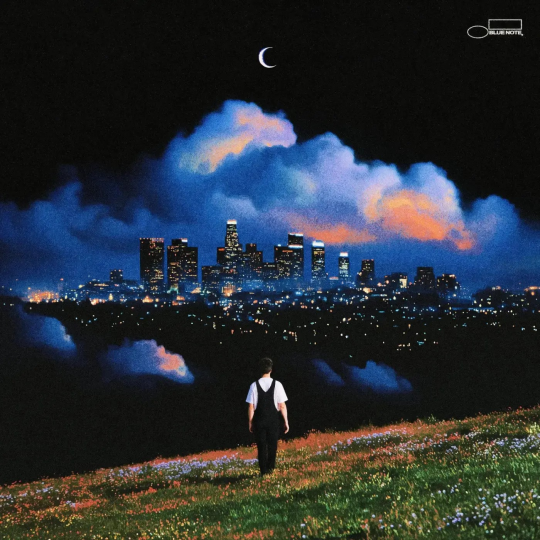
Memory Bomb feels like an album built around the idea of escaping into your own head. Across the record, Kiefer brings together the warmth of jazz with the rhythmic pull of hip-hop, creating something that feels both hazy and effortlessly groove-driven. The album is full with collaborators, but despite its expansive cast, there’s a clear sense of Kiefer’s identity holding everything together. There’s a dreamlike feel running through the album, with its quieter moments feeling almost weightless before the beats bring everything back down to earth. Rather than feeling like a collection of separate collaborations, Memory Bomb shapes itself into one continuous world.
The opening track, Daydreaming, really encapsulates its title. A steady drum beat carries along playful instrumentals and is beautiful complimented by sombre vocals. This opener serves as one of the most simplistic on the album, but this doesn’t take away from it as being an intriguing and well set up start to the project. It definitely feels like a track that isn’t concerned with being a standalone story, and more as a way to intertwine the piano as the album continues.
The second track, Nowhere Fast, really demonstrates the range of this album. It is a much more hip-hop focused song, with the instrumentals taking more of a back seat to the vocals that are very reminiscent of Frank Ocean that blend harmonious singing with a rap-like flow. This track is much more direct than some of the album’s more instrumentally driven moments. There is still that unmistakable Kiefer influence underneath it all with subtle jazz elements coming through with the production. It is this ability to shift between genres without making the transition feel forced that makes Nowhere Fast such an interesting moment on Memory Bomb, showing that Kiefer’s strengths reach far beyond his work as a jazz pianist and producer.
One of the things about this album that make it work so well as whole project is the lack of vocals in some songs. Tracks like Overture, Memory Bomb and Don’t Fail Me Now, serve perfectly as to why the album earns its title. They all carry a dreamlike quality where you don’t have to focus on interpretation in the lyrics and really feel surrounded within the instrumentals. Rather than making the album feel like a repetitive one trick hip-hip project, the contrast between these sections and the more vocal-led songs helps create a much more varied and complete listening experience. It also helps highlight Kiefer’s strengths as a musician, showing that even without a voice at the forefront, there is more than enough character and emotion within the instrumentation to keep engagement.
Another huge strength of this album that makes it feel so full of character is the well-constructed list of collaborations. The female vocals curtesy of Rae Khalil, Relyae and Amber Navran in particular add a whole lot of depth into the soulfullness of this project, and work excellently in mimicking that dreamlike, almost mother-esque lullaby feel. The key reason why these collaborations work so well in my opinion is that, unlike a lot of hiphop features, the additions feel like an extra layer within the song, rather than taking over from Kiefer as the forefront.
Track eleven toward the end of the album Can’t Let A Good Thing Go really draws attention as a personal favourite track. It is certainly one of the most fun and energetic tracks, the vocals soulful, yet almost conversational at times, and it works extremely as they work within the vocals in parts. One of the strongest songs and a great representation of the whole feel of the project.
As the album draws to a close, the piano slowly starts to ring out, the drum beat softens to wrap up the album beautifully and really feels like being awoken from a dream. It is a fitting ending to an album that constantly drifts between jazz, hip-hop and soul, leaving you with the feeling that you have just spent the last hour somewhere completely separate from reality. Memory Bomb succeeds in showcasing Kiefer’s versatility as both a musician and producer, never allowing one sound to dominate for too long. With its mixture of mesmerising instrumentals, soulful vocals and impressive collaborations, the album feels like a journey rather than simply a collection of songs, and one that is well worth getting lost in.
Kiefer: Memory Bomb – Out 25 September 2026 (Blue Note)
“Memory Bomb” (feat. Walter Smith III, Flanafi, Shibo) (Visualizer)