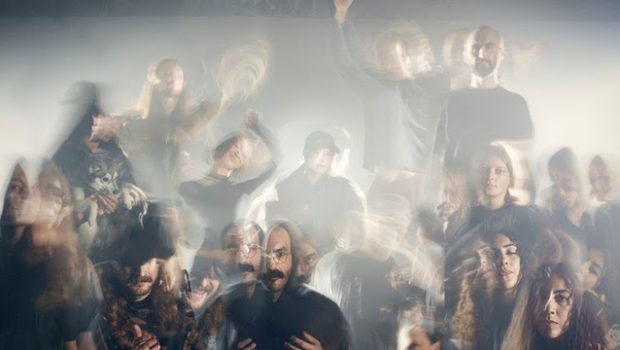
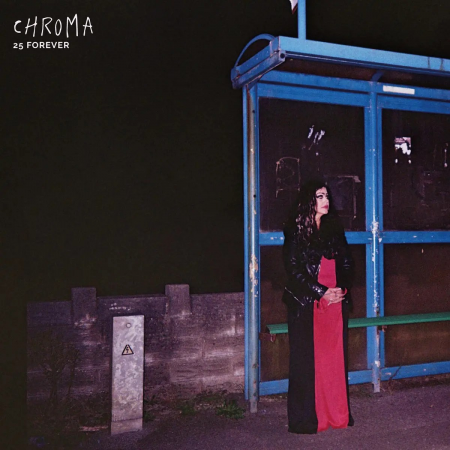
 From the post-industrial landscape of Pontypridd, South Wales, CHROMA emerged not just as a band, but as a voice – urgent, unfiltered, and impossible to ignore. The trio KT Hall, Liam Bevan, and Zac Mather, built their identity on tension: between melody and distortion, vulnerability and defiance, introspection and confrontation. Their sound feels lived-in, shaped by their environment and realities. They resist being softened or made palatable for the sake of views. Instead, their music pulses with intent, calling out misogyny, interrogating social decay, and documenting the complexities of growing up in a world that feels increasingly fractured.
CHROMA’s sound draws on early 2000s emo and alternative, emotionally direct and unpolished. You can hear it in the sharp edges and sudden softness, the way distortion gives way to something almost delicate. They echo The Distillers’ rawness and Elliot Smith’s intimacy, but these influences aren’t worn as imitation. They’re reworked and reframed through CHROMA’s own perspective. They aim to create what their younger selves needed, and it shows in every track shaped by the clarity (and cynicism) that comes with growing older.
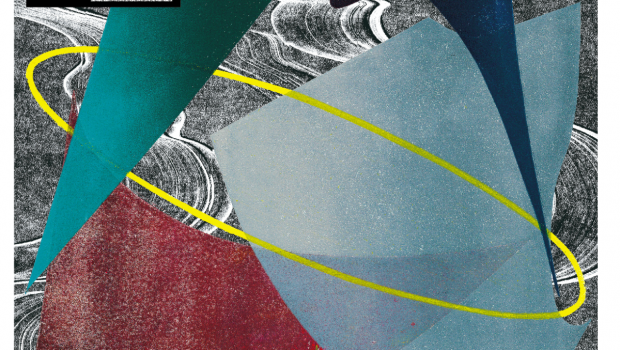
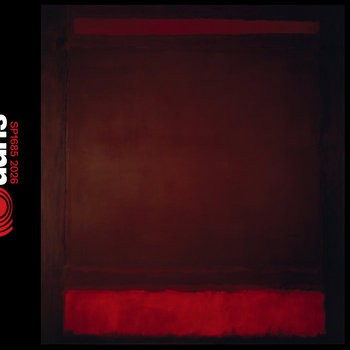
With 25 Forever, CHROMA take everything that defined their debut and turn it inward. While Ask for Angela cast its gaze outward at the world, this record focuses on personal grief, fractured friendships, disillusionment, and the strange limbo of your mid-twenties. KT Hall’s lyricism feels more exposed, shaped by her experiences. Recorded in Treforest with Steffan Pringle, the album embraces a more fluid, instinctive process. Songs were developed in-studio, allowing space for real-time experimentation. The result is a record that feels dynamic and unpredictable, thrashing and tender in equal measure. CHROMA feels fully realised here – heavier, more vulnerable, and completely unapologetic.
“What!” feels like a song constantly on the edge of snapping. It’s fast-paced, jagged, and driven by an urgent raspy guitar. The contrast between the melodic, sung verses and the half-spoken, almost exasperated chorus heightens its instability. Inspired by The Year of the Rat by Harry Shukman, the track zeroes in on the rise of far-right ideologies in Wales and the UK, filtering that reality through uncomfortable familiar moments – neighbours repeating rhetoric from the TV, influence spreading quietly until it’s too late to ignore. The repetition of certain lyrics builds into something wider than its literal meaning, touching on frustration, powerlessness, and the systems that keep people stuck. A standout moment sees a shouted “WHAT” dissolve perfectly into a guitar riff, capturing the track’s core feeling: confusion tipping into anger in a world that feels increasingly difficult to make sense of.
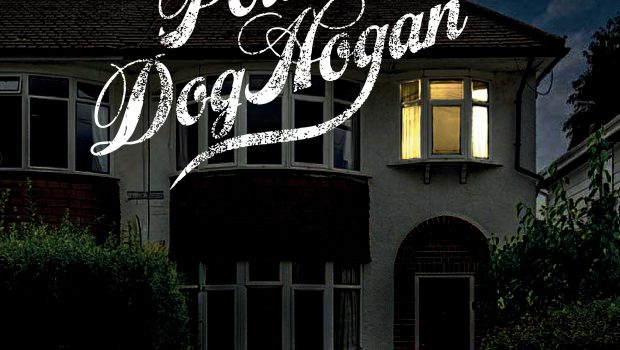
“Riverhouse” feels more atmospheric, leaning into a place that’s intimate and expansive. It unfolds cinematically; the listener being guided through a memory rather than simply hearing a song. Tapping into CHROMA’s lives, they dig into an experience that feels buried beneath a certain level of trauma. The track builds slowly, allowing reflection before opening into something more expansive. It’s in these quieter moments that CHROMA’s evolution shows confidence in restraint, in letting a song breathe rather than forcing it forward. “Riverhouse” doesn’t command attention in the same way as some of the heavier tracks, but it lingers longer, settling just under the surface.
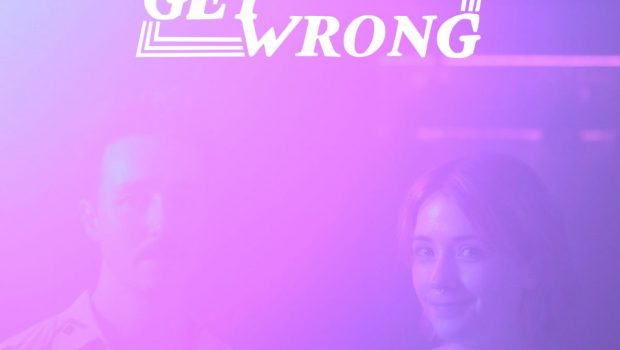
“Lifehack” pivots back into sharper territory, tackling the absurdity of modern life with a knowing doubt. It carries an ironic undercurrent – playing on the idea that everything can be optimised, fixed, or packaged into something digestible. I really enjoyed how they critique the culture surrounding self-improvement and quick fixes, delivered with CHROMA’s edge. Sonically, it’s restless – punchy, fast-moving, and unpredictable. The structure keeps you on your toes, never quite settling into something comfortable. That sense of instability works in its favour, reinforcing its core themes. “Lifehack” doesn’t offer solutions. Instead, it leans into chaos, embracing the lack of clean answers.
“Straight Men” is CHROMA at their most confrontational. Direct and biting, it carries both a personal and shared frustration. Lyrically, it doesn’t dance around its subject matter; instead, it cuts straight through, calling out male behaviour and attitudes with a clarity that feels intentional and necessary rather than provocative for the sake of it. The instrumentation mirrors this anger – driving rhythms, jagged guitar lines, and a sense that the track is on the verge of spilling over. It’s a song I can imagine thriving live, where that tension can fully erupt, especially during the bridge that slows it all down. But beyond the anger, there’s exhaustion, the kind that comes from having to say the same thing over and over again and not being heard.
The title track feels like the emotional spine. It’s aching, reflective, and quietly devastating in ways that hit once the song ends. “25 Forever” captures that disorienting moment where youth stops feeling infinite and starts feeling fragile, shaped by loss and the realisation that time doesn’t wait for you to catch up. KT Hall’s vocal carries a kind of restrained weight, never tipping into melodrama, which makes it hit harder. Musically, it leans into CHROMA’s softer edges without losing its bite. There’s a push between delicacy and distortion, echoing the emotional conflict at the heart of the track. It’s not just about being 25, it’s about everything that comes with it: the friendships that fracture, the grief that lingers, and the quiet understanding that you’ve come out of your twenties changed.
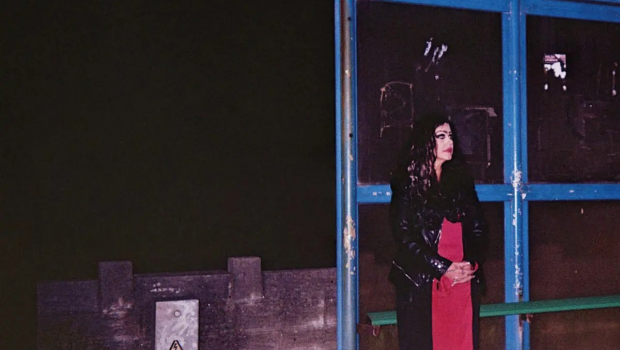
“Coalminer’s Granddaughter” feels more reflective, shaped by its origin as a response to a photograph from Clémentine Schneidermann in collaboration with Charlotte West, and carries a quiet sense of observation rather than confrontation. Rooted in the history of South Wales, the track explores deindustrialisation and generational memory with a subtlety that allows its themes to unfold gradually, never feeling forced or overstated. There’s a strong sense of place woven throughout, as CHROMA step slightly outside of themselves to tell a story that feels both personal and collective, resulting in something that lingers – less immediate than the album’s sharper moments, but no less impactful.
“Matching Tattoos” moves into a fragile space, slowing the pace to sit fully with the themes of grief and longing. Built on atmospheric instrumentation, it captures the repetitive, almost dreamlike nature of loss where memory, absence, and real-life blur together. It reflects a desperation for connection with someone gone, while recurring lines act as a harsh return to reality each time that closeness slips away. There’s no sense of resolution here, just a refusal to let go, and the choice to let the music carry on after the lyrics finish only reinforces that feeling – grief lingering, even when there’s nothing left to say.
“Sometimes (Weithiau)” carries a softer tone, opening with a simple guitar line that lets KT Hall’s vocal control take centre stage, moving effortlessly between restraint and intensity. As an English reworking of “Weithiau” from their Welsh-language EP Llygredd Gweledol, the track revisits heartbreak from a distance, reshaping it into something more contemplative. The tempo shifts mirror the push and pull between memory and acceptance, while the lyrics move beyond romantic loss into something arguably heavier: the breakdown of friendship that lingers long after the relationship itself has ended. There’s a sense of looking back with clarity, acknowledging both growth and lingering pain.
“People Pleaser” opens with a stripped-back, almost indie-grunge feel, its simple guitar melody giving the first verse an intimacy that makes the lyrics hit. As the drums kick in, the track gains momentum, mirroring the escalating pressure of constantly putting others first, until it overwhelms. Lyrically, I think it’s one of CHROMA’s most direct and relatable moments. Honest to the point of discomfort, tracing the toll of self-sacrifice on identity and mental health. There’s a constant tension between wanting to be liked and recognising the damage that comes with it, with lines that feel almost confessional in their delivery. It’s that balance of vulnerability and frustration that gives the track its edge, capturing the moment where self-awareness sets in, but change still feels just out of reach.
“It’s Stupid” leans into a more melancholic sound, carrying a sadness that never lifts, even as the chorus opens up. There’s a hesitancy woven into the track, both musically and lyrically, as if it’s constantly second-guessing itself, reflecting the uncertainty that comes with falling for someone while still carrying past damage. The higher vocal moments add to that vulnerability, giving the chorus a fragile lift without ever losing its underlying weight. The track plays with expectation, briefly feeling like it might fade out before pulling itself back in, reinforcing that sense of emotional back-and-forth. At its core, it captures the contradiction of wanting something you’re not sure you can trust – where love feels both hopeful and foolish at the same time, and you lean into it anyway, knowing it might fall apart.
CHROMA: 25 Forever – Out 17 April 2026. (Alcopop! Records)
Watch CHROMA’s ‘Lifehack’ music video now: https://www.youtube.com/watch?v=34wmtIT5Mmw&list=RD34wmtIT5Mmw&start_radio=1