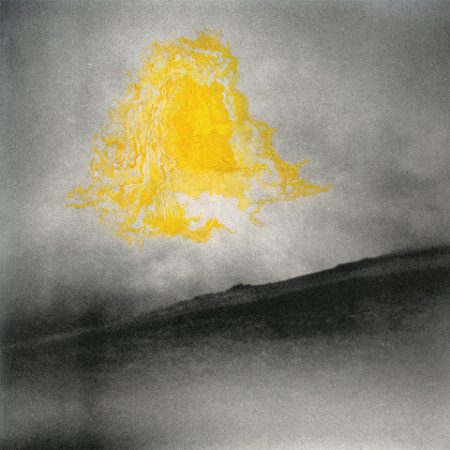
 ‘Everything in Readiness’ genuinely sounds unlike anything else. Describing Shovel Dance Collective as an ensemble specialising in traditional music might have some truth but does them a disservice as it limits their considerable scope. While they do delve into the archives for ancient folk song, the methods they use to interpret those songs are contemporary, experimental and often rowdy. Each component of their name tells a story. As a loose nine-piece grouping who operate elsewhere as parts of groups like caroline, Gentle Stranger and Sullow, or as solo artists, such as Nick Granata, they bring their outside experiences to an inclusive collective. The dance part of their name is more questionable. Apart from the occasional reel or jig, they are not immediately danceable in the way of the current most well-known band using collective in their name, Ezra Collective. Shovel, though, is especially pertinent. Like archaeologists, they dig up specific and underperformed traditional songs, brush them off and present them in new forms, although they prefer the metaphor of weaving or making a quilt to describe their approach which relies on improvising with predominantly acoustic instruments and inventive recording techniques such as field recordings and tape manipulation.
Reading their descriptions of the songs can make them sound like diligent academics and lead to the expectation that the music will be dry, especially as the songs tackle subjects like expropriation, the penal system and the struggles of the working class. Shovel Dance Collective are evidently serious about their processes but what emerges is far from arid. The opening triptych of Jer The Rigger, Foxhunter’s Reel and Tally Ho! Hark Away! has a slow fade in before bringing Oliver Hamilton’s fiddle to the fore, adding drones and building towards the reel that constitutes the second section. Tally Ho! Hark Away! has strings, hunting horns and drums to create the freewheeling ecstatic crescendos associated with caroline as well as bellicose vocals; it is an appropriate way of capturing the stampede of chasing the fox. Whereas the song’s traditional ending may celebrate the huntsman’s success, Shovel Dance Collective choose celebratory mourning as the fox is released from a barbaric world.
Jowl, Jowl and Listen Lads initially came to Granata’s attention via a documentary on singer and folklorist A.L. Lloyd who put out a call through the Coal Board in the 1950s for miners’ songs. While there is considerable dispute about the exact words, they have chosen a version that emphasises the death of a miner’s father in the pit despite the care he took and serves as a warning about the dangers of work and the importance of keeping each other safe. With its clanging percussion, wall of noise, foghorn vocals and dramatic pauses, it captures the claustrophobia of underground conditions and the pick battering the seam.
Some of the shortest pieces are amongst their most experimental. Ní ar Chnoc nó ar Ísleacht (“Mists are the best times for sowing”) uses whistles and tape collages to produce an unnerving effect. On Rye Marshes (A Crow Replied to Bells) begins with a crow’s call heralding a guitar and banjo improvisation, its gently meandering nature making for a refreshing respite from its predecessors.
While many of the tracks have prominent vocals, on Who Killed Cock Robin? A Summoning (Kind Morning in our Fists) they are a distant, threatening murmur. The song itself displays their capacity to create discord and atonality out of acoustic music. It segues into Who Killed Cock Robin? / Gilbert’s Jig which they deem to be the album’s pop song. This is very much a relative term, although it does have a jaunty nursery rhyme structure. It has been suggested by A.L. Lloyd that songs made for children tend to be soothing whereas those created by them tend to be macabre and grim. In this instance, the song straddles this divide before Hamilton’s jig takes over.
The album ends with its two lengthiest pieces at roughly nine minutes each sandwiched between the brief interlude The Worms Crept Out (A Leuven Carillon) on which a bell tower rings out, then gives way to bird call. A lesser-known and never previously recorded Hampshire song, Bold Captain Avery is about a pirate captain. While Avery was by all accounts a dreadful man, the song celebrates the myths and stories that the labouring classes of the era wanted to tell themselves. Its promises of gold and stories of making war with foreigners and heathens sadly still hold an appeal for some. Musically, it starts with distant brass and has a compelling vocal delivery. The mid-song improvisation is especially lovely, a wistful breathing space between two commanding poles. ‘Everything in Readiness’ concludes with what they term as their prison abolition medley, A Hundred Stretches Hence / I Wish There Was No Prisons. The first three verses were recorded and sung a cappella in a church in Rouen and are beautiful and stirring. As the track develops and goes through a variety of manifestations, it comes closest to reflecting the ensemble’s practice. The song is no longer sung today so they created a melody, anglicised it and created an extra verse. It features cassette tapes, field recordings, improvised passages, guitar feedback and fragments of other songs. Notably, the lyrics contain footnotes like in a piece of academic research but the song does have a forceful message about the absurdity and waste of incarceration. It ends plaintively.
It encapsulates what Shovel Dance Collective does so well throughout ‘Everything in Readiness’. They delve into historical song to make firm points about the modern world and its imbalances of power. While they embrace the acoustic traditions of music, they constantly take it into new territory, sometimes bracing, often thrilling.
Shovel Dance Collective: Everything in Readiness – Out 23 October 2026 (tak:til / Glitterbeat)
the Rigger / The Foxhunter’s Reel / Tally Ho! Hark Away! (Official Video)

I was editor of the long-running fanzine, Plane Truth, and have subsequently written for a number of publications. While the zine was known for championing the most angular independent sounds, performing in recent years with a community samba percussion band helped to broaden my tastes so that in 2021 I am far more likely to be celebrating an eclectic mix of sounds and enthusing about Made Kuti, Anthony Joseph, Little Simz and the Soul Jazz Cuban compilations as well as Pom Poko and Richard Dawson.