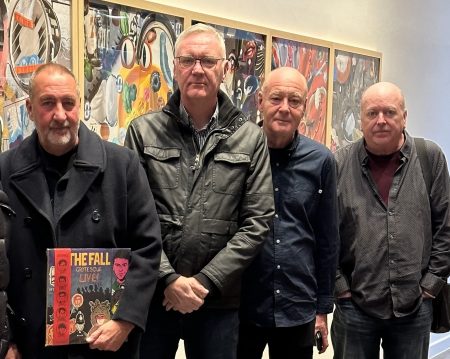
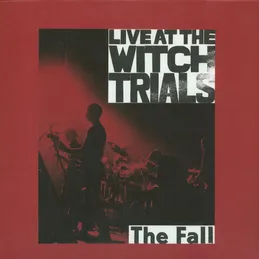
 Having been lucky enough to have witnessed The Fall live several times from the early 90’s onwards, it’s easy to see why they were, and still are, one of the most revered bands to ever emerge from Manchester. “We are The Fall, northern white crap that talks back” they famously announced on their 1979 debut ‘Live At The Witch Trials’ paving the way for their unique blend of off=kilter melodies and lyrics, and throwing the gauntlet down for independently minded bands everywhere.
Not that they were punk or even post punk or even rock, but somehow managed to have musical limbs in all three and a head in the sounds of German komische rhythms and melodies.
Not many bands can claim to have so much written about them, with albums dissected and discussed at length, as well as an ever expanding archive of information collated and maintained by devoted Fall aficionados, surely it’s only a matter of time before Manchester council give them their own permanent museum! Someone needs to have a word in Burnham’s ear.
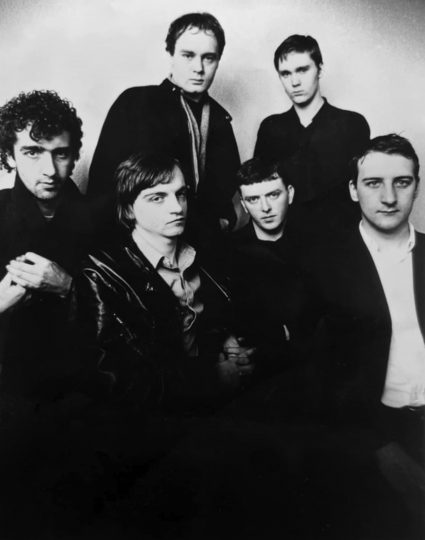
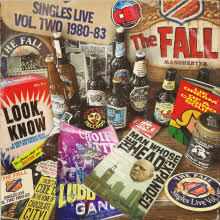
Until that happens, we have the inaugural Fall festival! A whole weekend devoted to this beloved Mancunian outfit with The Fall Futures And Pasts event taking place at Band On The Wall on 5th to 7th June 2026 with live music from Fall band members, interviews, DJ sets, a play, and walking tours. As if that wasn’t enough, there’s also the new album ‘Singles Live Volume Two 1980-83’ on Popstock Records, comprising brilliant live versions of early Fall songs.
There are those Fall obsessives out there who are way more knowledgeable than me when it comes to the ins and outs of all things Fall related, yet from a mere fans perspective, even eight years on after Mark E Smith’s passing, it’s heartening to see that their legacy expands further than ever. We caught up with drummer Paul Hanley to find out more.
For the upcoming new release, Singles Live Volume 2, obviously you must have had thousands of hours’ worth of live recordings to go through, so how does that process work of gathering the live recordings and, and then deciding what to put on the album?
PH: Well, one of the the great things about The Fall is that there’s a whole network of fans out there who curate this stuff. One of the people we work with is a guy called Barry Riley who’s an uber Fall fan, but he’s kind of become the guardian, in that he knows most of these recordings in a way that we’ll never know. So we asked his advice, and he basically sent us a shortlist, we went through them, and picked the best. I don’t think any of us would have been able to trawl through them. I mean, there’s an inordinate amount of recordings. If you look, there’s a site that’s called The Gigography that’s got listings of every gig and whether it was recorded and what the bootleg is like. It’s just an incredible amount of data that’s out there, so we were able to tap into some of that. Because the thing about The Fall is, that it exists in the hands of the fans now, because there’s no one group of people who can say they own The Fall because obviously there was a lot of line ups and now that Mark’s gone, there’s nobody who really owns that brand, if you like. Obviously, his family own the intellectual rights, and quite right and all, but, we couldn’t really say we could represent The Fall any more than any other line up could say they represent The Fall. We can certainly say we represent this particular time, which is what we’re trying to do, to represent that time in an interesting way.
 Well, it definitely worked well, as Volume One was amazing.
PH: It’s a lovely thing as well. I think that was very important to us because there’s a lot of stuff out there, a lot of compilations, some of which not all, but some of which, you know, there’s a bit less care taken of them than there might be, should we say. So we really wanted this to look good and be something you can hold in your hand and something you can study, and, and I think that Volume Two is equal to Volume One, if not better, really, as a piece of kit, if you like, as a product. It’s a lovely thing!
As you were just saying,, The Fall now belongs to all the fans, really, and I think the brilliant thing about what you’re doing with both the albums and the festival, is as there’s plenty of Fall fans around the world who are obviously too young to have been there back in the day for this early line up, it’s helping to keep the legacy going. Do you feel like now you’re reaching newer generations of fans as well?
PH: I think The Fall are bigger now than they’ve ever been, I think, in a lot of ways. I mean I don’t know if it’s because people who grew up in a certain age, but every other TV programme’s got a Fall song on it! There’s The Cage that’s just been on and that’s got ‘Hit The North’ in one episode, there’s loads you know. The Fall got mentioned in the Barbie movie! I think with The Fall their reach has got bigger than ever. I think with the festival, it is for younger people but it’s also a way of older Fall fans connecting with each other because that community’s a big thing. It was Steve’s idea for this festival, and he tells the story that he got an email from a guy saying, you know, I really wanted to thank you for doing The Fall, I met my wife at a Fall gig, some of the best times of my life have been at a Fall gigs, I met a lot of my friends there, so it means a lot to those people, the Fall fans, so yeah, that’s definitely who it’s for.
You were saying loads of people have maybe contacted Steve or yourself over the years and thanked you for stuff, but what’s the most bizarre place around the world that you’ve ever encountered a Fall fan?
PH: That’s a good question. Well, Iceland was always an amazing one for me. We went to Iceland in ’82 and ’83, and it really, really wasn’t on the radar . Nobody went to Iceland. I think the Stranglers did an album launch there and maybe the Kings played there in the ’70s, but there was quite a scene there and they really took to The Fall for some reason. If you go to the Punk Museum now, there’s a lot of stuff from that time when we went with The Fall. I didn’t know what to expect at all when we went there. I was expecting, you know, thirty people or whatever, but it worked out really well, and we went back the next year. We went to New Zealand, and we were in the proper singles chart in New Zealand, which absolutely blew my mind, to be honest!
Didn’t you get stopped at the airport by paparazzi or something like that?
PH: Yeah, well when you say paparazzi, there were two blokes! But the story of that is, we all just shuffled out with our sort of broken-down cases and because we were four weeks into an Australian tour, we were all a bit knackered, and we all shuffled out looking a bit worse for wear, and these two photographer guys said “‘You can’t come out like that. You need to come out looking a bit more bouncy and, and happy to be here” So Marc Riley did that kind of ridiculous skippy thing out, with a smile on his face, and that made the front page of the newspaper! Happy Fall guitarist! But it was completely staged for the photograph. You know, you can’t believe everything you read in the newspapers!
You were only 16 when you joined The Fall, and you were too young to go to the States, but, what do you remember of the highlights of those early years? What were your expectations as a teenager when you joined, and what did you learn?
PH: Well, I learned everything. I had no expectations at all. I didn’t know anything about being in a band. I’d played one gig when I joined The Fall, and that was at a youth club to 12-year-olds, 14-year-olds, and that was the only gig I’d ever done. It was all a complete revelation to me. I had no clue. I’d never seen a drum kit micced up, obviously, I had some idea, my brother was in a band, but I was kind of thrown in the deep end. I think it’s the best way to do it, You just got to get on with it. What was quite handy was that I didn’t realise what a big deal it was. If I’d have really sat down and thought about what I’d got into, I might not have had the nerve to do it. It’s not a word that’s used about The Fall much, but it was quite a nurturing environment for me to go into. I had Steve, Marc and Craig, it was like I had three older brothers in the band, and I also sort of had, in a mad way, Mark and Kay were, like, you know, your parents in a way. I have said this a lot but one of the things I always thank them for is that they made me go to college to do A-levels when I was in The Fall. Because they said “You’re not leaving at 16 just to be in a band and then to do nothing, you need to carry on with your education, “and one of the stipulations of me joining was that I went back to college and did my A-levels, which I’m always really grateful for. So yeah, it wasn’t as scary as it might have been because I had people well looking out for me at least. I didn’t know any different, so I didn’t know that The Fall was any different from any other band, as I didn’t know what other bands were like. You know, it was only afterwards when you come out you think, that was quite an amazing experience, really. It wasn’t like what it might have been, say, being in any number of other bands. People weren’t silly, if you know what I mean, it was a serious business being in The Fall. It wasn’t frivolous, and it wasn’t how many drugs we can take. The whole purpose of the exercise was to be the best band you could be, you know. I mean, I’m not saying everybody was saint or anything like that, but nobody was in the band for the sort of perks of being in a band. People were in The Fall because they wanted to be in The Fall
One of the highlights of the Festival is going to be the Lost in Music band. Obviously, you’re going to be playing in that and you’ve got the brilliant, BC Camplight on vocals, so what can you tell us about the band?
PH: Well the band is me, Steve and then me and Si are dong tag team drumming, and then we’ve got Steve Trafford who was in the band around The Fall Heads Roll album, absolutely brilliant musician, he’s the guitarist, and then we’ve got BC on vocals. There’s no Fall songs involved, but, you will recognise them if you’re a Fall fan, that’s all I can say!
Then also as part of the festival you’ve got your brilliant Oh Brother podcast, (with brother and Fall bassist Steve Hanley), and you’re going to be speaking to Simon Armitage for this one. When you do the podcast, how do you approach it? Do you approach it more like a kind of conversation?
PH: It very much is a conversation, yes. The idea was that if you were sat in the pub, and we were sat on the next table, and you were ear-wigging, that’s what you’d get, really. We tend to see where the conversation will go. I mean, we try to put some Fall content in usually, but but we’re not beholden to a script. It’s not like one of those off a menu where everybody answers the same questions. We just basically see what’s interesting when we speak to the individual person. You might end you might end up talking about the New York underground system with Steve Albini or we could end up talking about anything, you know, which is quite fun if it’s interesting. Touch wood, we seem to have had a really good conversation with everybody we’ve had on there so far. We’ve not had any duffers! (laughs)
What I also like about it as well is that I grew up in Northern Moor, so I’m very familiar with Wythenshawe and The Forum where the podcast is made, so how important is it for you to keep Wythenshawe and creativity within Wythenshawe on the map? Because I don’t think it gets the credit it deserves a lot of the time.
PH: It’s this but it’s massively important to me, it’s a book I’m writing at the moment about creativity within Wythenshawe. So it’s about the most important thing I can think of, really, because it’s a unique place Wythenshawe. It’s not in a city, and it’s not out in the countryside, and it presented a real opportunity for people, you know. My family came from Plymouth Grove, and I’ve talked to Johnny Marr about his family who came from Ardwick. We came out to Wythenshawe and it was like, I mean, my brother described it as like going to Disneyland, going to Wythenshawe. I mean, you know, we came from inner-city places to a to a house with a front garden and a back garden and two indoor toilets and Wythenshawe Park on your doorstep! I think it was a real kind of ‘here’s an opportunity, let’s see what you can do with it’, you know, and I think a lot of people did make the most of that opportunity. It means everything to me without exaggerating.
I’ll look forward to, to reading that book, then.
PH: I look forward to finishing writing it! (laughs)
As part of the Fall festival, talking about writing, you’re going to be presenting your monograph, Das Gruppe On The Wall, all about The Fall at Band On The Wall, what can you tell us about that and how did that idea come about?
PH: Well, with the festival being at the Band on the Wall, it just seemed to be obvious thing to write about the number of times The Fall played there, because what I find interesting is, and it’s not by any means a big book, you can tell a lot of stories by focusing on a small amount of events, if you know what I mean. There was an event about Bob Dylan at the Free Trade Hall in 1966, and by telling the story about one night, you can sort of tell a massive story about Bob Dylan, about Manchester, about music, about all kinds of things. So I think it’s interesting to have a really tight focus on a small group of events and then tell the story around that, which is what I’ve tried to do. Because, there’s a lot to talk about with The Fall and the Band on the Wall as there’s the Manchester Music Collective which is a part of Manchester music history that gets overlooked a little. It gets overshadowed by Factory. But you know, they were quite instrumental in getting the Manchester music scene into a cohesive thing, the Musicians’ collective, and they were based at the Band on the Wall, so there’s a bit of a bit of talk about that as well.
 Is there anything else you want to tell us about the festival and the album?
Well, I’m really pleased with the songs and the, the performances that we’ve picked for the album, it sounds great, it just sounds immense. The versions of the songs are great, they’re quite revelatory really. We’ve got ‘The Man Whose Head Expanded’ with Marc’s keyboards on and it’s completely different because, obviously, when we released it as a single he’d gone by then. If you listen to it, there’s kind of like a gap where his keyboards should be, so to put them back has been really nice. I mean, that’s the interesting thing about these, you get versions that were recorded before we put them out sometimes, and versions that were recorded after. But it’s interesting to see the single as part of the life journey of the song, if you see what I mean. So sometimes you can hear what the song sounded like before it was made a single, then also what’s unusual about The Fall is that songs keep evolving after they’ve been released on record. You find that the recorded versions are not the finished versions for some songs in some ways. So to be able to do that and go back and say, “Look, this is what it sounded like, when we played this a year after it was a single, it sounded like this, or when we played this six months before we were making it a single, it sounded like this.” It’s a really interesting thing because, you know, I’m assuming nobody’s buying this album who hasn’t or who isn’t already particularly familiar with the records so it’s, it’s a way to give something different, you know.
Also like you say, it’s a brilliant way as well to address the balance of you guys having some form of quality control over what’s been coming out in The Fall’s name
That’s right. I mean, it’s understandable if you’re going to put a Fall album out, who do you speak to, you know? It’s difficult because it’s not an organisation, it’s just a group of disparate people but with this one because it’s the four of us, we could all pull our two-penneth in and say, “This is what we want.” And the one thing we all want is for it to be a really good product.
Finally, anything else you want to tell us about the upcoming weekend?
Just that we couldn’t really put any more in it, really, there’s something going on the whole time. We’ve got Simon’s Walk. We have people, you know, not too pleased that they couldn’t get on the walk and then we’ve got people not too pleased that they’re on the walk because they’re missing something else that’s going on while on the walk! We’re just trying to make it so that there’s something really interesting going on the whole time, really. It’s great to have Una from the beginning of the band and Kieran from the end of the band, you know, because we want to represent the whole thing of The Fall. There’s not many bands with a fifty year interesting history. There might be bands with fifty years’ history, well, the band were going for forty-whatever years, and for all of that time, there was never a point where you get ‘Oh, this was the five years where they were doing a cabaret scene and just playing the hits, or this was the bit where they split and didn’t do anything, and then they got back together.’ For the whole of The Fall’s existence, they were interested in playing live and releasing new stuff all the time. I think that’s possibly unique for a band to have that much going on for the whole of its existence and it’s only testament to Mark’s determination and his drive, you know, you’ve got to give him that. Like I say, there’s no cabaret years or, Fall split-up years or this was the two years they took off where they didn’t play live. Not at any point. There’s some points where possibly he should have done that. Certainly, you know, he kept going even at the end when he clearly wasn’t well. But The Fall didn’t exist as an idea. The Fall was an ongoing concern at all times, and he was determined for that to keep going.
It’s good that the legacy lives on.
Yeah. I think it needs celebrating that, and I think it needs pointing out. I mean look at what’s it’s inspired. There’s not many bands you can have a festival about, where you’d have recreations of the play they did or where you’d have the Poet Laureate just coming on to talk about how much he loved the band. Then there’s other people we’ve got on there, you know Jim Moir, Frank Skinner. The Fall’s different, definitely!
The Fall: Singles Live Volume Two 1980-83 (Popstock Records / Bella Union) – out 29th May
The Fall: Futures And Pasts: Band On The Wall – 5th to 7th June 2026
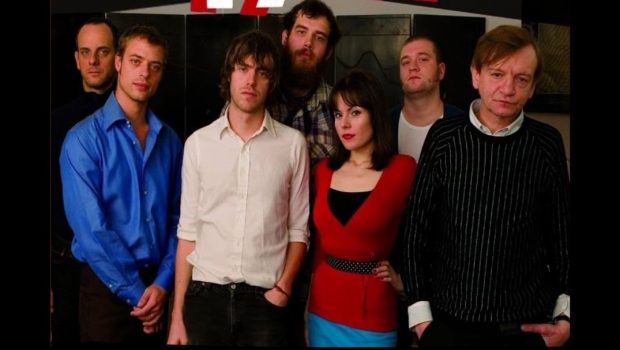
Fall photo credit: Eric Blugeon

From the early days of creating handmade zines, in a DIY paper and glue style, interviewing bands around town, then pestering Piccadilly Records to sell them, to writing for various independent mags such as Chimp and Ablaze, writing about the music I love is still a great passion. After testing the music industry waters in London with stints at various labels, being back in my hometown again, writing about this city’s vibrant music scene is as exciting as ever. All time favourite bands include Sonic Youth, Nick Cave, Patti Smith although anything from electro to folk via blues and pysch rock will also do nicely too. A great album, is simply a great album, regardless of whatever musical cage you put it in.


 ON THE UPCOMING FALL FUTURES AND PASTS FESTIVAL, BAND ON THE WALL 5TH TO 7TH JUNE, AND NEW ALBUM – FALL SINGLES LIVE VOL TWO 1980-83)