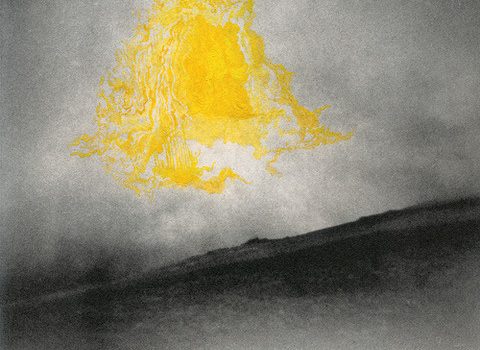
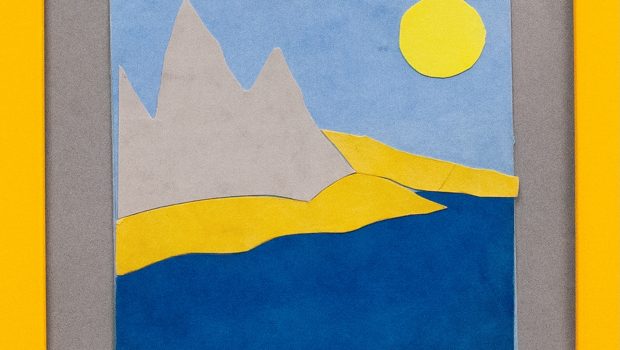
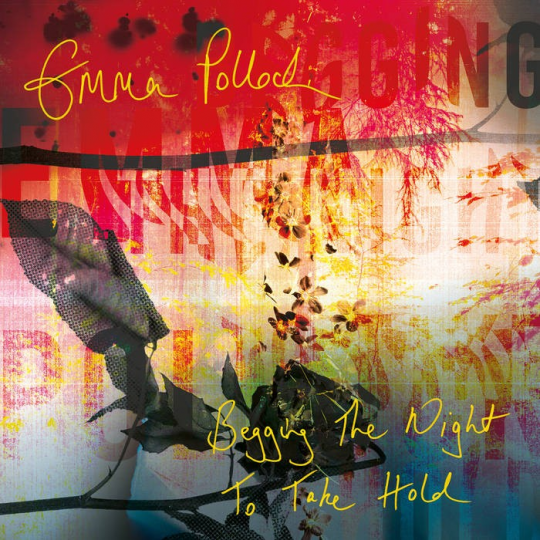
 As album releases diminish to a trickle, December is a good time for Silent Radio to catch up on some of the seriously great albums we were unable to cover at the time. First up is Emma Pollock’s ‘Begging The Night To Take Hold’ which was submerged by the end of September rush, pretty much 2025’s busiest week for new releases.
When The Delgados switched from their early scuzzy indie pop to the more mature sound of standout single ‘Pull The Wires From The Wall’ which was voted into the number one slot on John Peel’s 1998 Festive Fifty, it became apparent that Pollock possessed an incredible voice of rich timbre which hints at a Scottish accent. In the twenty years since the band split, her solo albums have been a rare and precious commodity, this being only her fourth. Since ‘In Search Of Harperfield’ was released nine years ago, she has experienced a tumultuous time including the death of her father, the universal trauma of a pandemic and an autism diagnosis, all of which delayed and seep into the new album.
On ‘Begging The Night To Take Hold’, she is joined by Pete Harvey on cello, Graeme Smillie (piano and bass) together with fellow Delgado Paul Savage on production and drums. The quiet intensity of the line-up emphasises the quality of her voice and the ten songs. Beginning with a bass introduction, opening track ‘Prize Hunter’ soon sees Pollock’s voice up front, exposed and asking, “what does a rainbow sound like?” Written pre-diagnosis, there are plentiful signs of neurodiversity (“sitting on my shelf my accumulated wealth / all the words and numbers you could want / but I sometimes ask if they endanger my health.”) They are descriptions that make this writer who has an obsessive desire to catalogue all the great music he hears question his place on the spectrum. As guitar squiggles, swooning cello and piano add to the mix, the chorus is a giddy rush as she offers, “let me out / let me shout for you.” The conflict between order and chaos is also apparent on ‘Future Tree’ from its opening verse suggesting “rogues and thieves, you know they masquerade as new ideas.” Building through anthemic piano, the bridge sees Pollock perceiving “too many numbers / and not enough poetry / I let them fight to the death / but will it also be / the death of me?” It is an exhausting but exhilarating track and cause to reflect on how numbers, music and poetry are not exclusive of each other but are interrelated as they utilise patterns while working on the intellect and emotions.
Arriving on a lush carpet of piano and cello, ‘Rapid Rush Of Red’ sees her confronting perceived injustice in a relationship. The music ramps up to match the drama but as she reflects on her own behaviour, there comes the desire “to try another colour and paint with that instead.” As Delgados and solo songs have invariably seemed welcoming to synesthetic listening, it is an appropriate metaphor.
While these early numbers have a strong sense of autobiography, ‘Marchtown’ has an epic, historical sweep as it cuts between the 16th Century Battle of Langside and the narrator’s contemporary life, all garnished by the interplay between synths, cello and her evocative voice. From its heart-melting piano and cello intro, ‘Jessie My Queen’ is an exquisite celebration of early 20th Century Glaswegian illustrator Jessie M. King, noting her most ironic name and its “who needs Paris” line suggesting the romanticism of a Scottish cityscape.
There are so many distinguishing features to recommend on each song. On ‘Something Of A Summer’, there is a moment where everything else shuts off leaving only a twangy bassline. It also boasts an emotive cello break with a violin-like tone and drama building piano. The way Pollock’s voice curls around the bleakly dramatic cello of ‘Black Magnetic’ is another highlight and a line from it gives the album its title. Its air of buttoned-up but desperate drama is captured in its opening lines, “it’s right about now, I should take off my shoes / And run into the seas, my skin turns to blue.” The mood is maintained by the tightly coiled ‘Fire Inside’, its generally slow-boiling tempo shifts temporarily giving way to a mini-explosion that is quickly reigned in.
While the opening cello notes of ‘Pages Of A Magazine’ have a bossa nova feel, it gradually builds to its final revelations that “we were running from your own fear of standing still” with staccato grand piano reminiscent of Sparks. The album ends up on a note of fragility with the ballad ‘I Used To Be A Silhouette’ and its air of tension and failed communication (“I almost woke you up last night to tell you I was frightened / but silence gets the better of us / and you slept on unenlightened.”)
Although its deep sense of emotion could have made it an uneasy listen, ‘Begging The Night To Take Hold’ ultimately has so much to offer through its luxurious technicolour melodicism, heightened atmosphere and Pollock’s exquisite voice. It is a superb addition to her solo catalogue which may even match that of The Delgados, some achievement when they can lay claim to being the best band of the late 1990s/early 2000s.
Emma Pollock: Begging The Night To Take Hold – Releases 26 September 2025 (Chemikal Underground)

I was editor of the long-running fanzine, Plane Truth, and have subsequently written for a number of publications. While the zine was known for championing the most angular independent sounds, performing in recent years with a community samba percussion band helped to broaden my tastes so that in 2021 I am far more likely to be celebrating an eclectic mix of sounds and enthusing about Made Kuti, Anthony Joseph, Little Simz and the Soul Jazz Cuban compilations as well as Pom Poko and Richard Dawson.