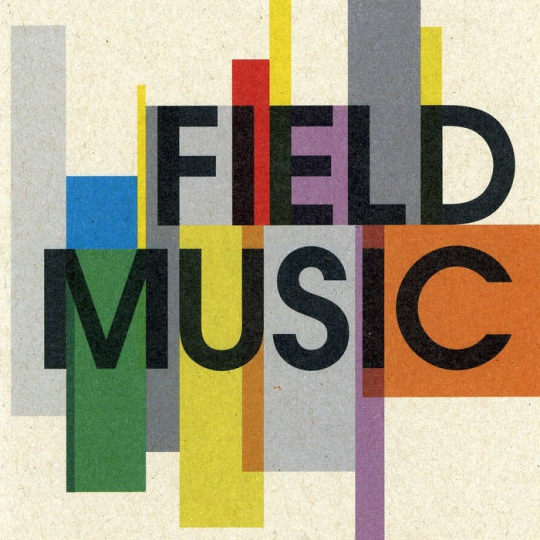
 Reissues are an ideal opportunity to take stock and evaluate a group’s career. It is twenty years since Memphis Industries issued the first, self-titled Field Music album. Over the ensuing period, the Brewis brothers have released 21 albums, either under the band name or in various solo guises. They have racked up a Mercury nomination (for ‘Plumb’), three albums that have made a minor dent on the UK Top 40 and some intriguing diversions such as producing a song set for the Imperial War Museum evaluating impacts of World War I (‘Making A New World’). However, despite this ostensibly successful career, the band recently announced that they were forming a Doors tribute act, The Fire Doors, with the aim of playing one gig per month to subsidise Field Music and make it financially viable for them to continue.
It is an honest reflection of how difficult it has become for artists below the stadium packing, billion streaming level to make a sustainable living from music and how creating a portfolio career has never been more essential for creatives. This feels a world away from 2005 which, while there were concerns about the implications of file sharing for sales of physical product, was the last time when indie bands were enjoying a substantial share of chart action. While fellow Sunderland band, The Futureheads (whose David Hyde is also part of The Fire Doors), fitted more comfortably into the spiky post-punk lineage that stretched back to Wire and Gang of Four, through The Minutemen and Big Flame to Elastica, Field Music’s influences were more ambitious and even esoteric. Their myspace (remember that) page mentioned such contrasting choices as The Left Banke, My Bloody Valentine, Stravinsky, Thelonious Monk, Stax & Atlantic R&B, Big Star, Jimmy Smith, Serge Gainsbourg, The Neptunes and Duke Ellington.
Listening to ‘Field Music’ now, it comes across as an incredibly adventurous almost continuous 12-song suite. While it has the constantly shifting energy of post-punk, its sounds are heavily influenced by the baroque-pop of Van Dyke Parks and Todd Rundgren. Opening track, ‘If Only The Moon Were Up’, is a classic example. Within its chorus, there are three distinct melodic changes and its two verses are significantly different from each other. While this could be too hyperactive for mainstream tastes, its habit of changing its melodies every ten seconds is an irresistible combination for someone like me who would cite both sixties pop and then post-punk as formative influences. The way ‘Tell Me Keep Me’ teeters on the brink of disintegration, throwing in abrasive guitars, glorious keyboard lines and vocal melodies is a delight. ‘Luck is a Fine Thing’ stands out for its Beatle-esque orchestration. By far the longest track at over five minutes, ‘It’s Not The Only Way To Feel Happy’ feels uncharacteristically restrained and melancholic. ‘17’ throws in some freeform sax and a mid-section of such mystery that they recently took to social media and offered a biscuit to anyone who can help them to identify its chords. The melodies are more upfront than in their later work, never better exemplified than in the hook laden ‘Like When You Meet Someone Else’. It is a collection characterised by an unusual lightness of touch, ‘Got to Get the Nerve’ being an excellent illustration of that quality. There are moments that feel like a time capsule so the title ‘Get to Write A Letter’ now feels such a quaint concept.
As an additional attraction the package also includes a first vinyl release for ‘Write Your Own History’, a nine-song 2006 collection of B-sides together with three previously unreleased tracks. Inevitably, it is a less cohesive collection but still has plenty of individual moments to recommend it. ‘You’re Not Supposed To’ has a hummed introduction that conjures the expectation of a Christmas tune before shifting into the type of sophisticated arrangement that would become a prime Field Music characteristic over the coming two decades. The understated ‘I’m Tired’ has some deeply strange rhythmic patterns and the Mackem melodies of ‘Test Your Reaction’ emerges from some backward masking. There is a playfulness to the “positively negative” chorus of ‘Alternating Current’ while ‘This Old Design’ is furnished with piano lines and melodies over an improbable rhythmic structure and a wonderfully abrupt ending. ‘Write Your Own History’ finishes on a high with ‘I Need to Get Sick On You Now’, the closest Field Music have come to beat pop and with an enigmatic proclamation for a band who have never appeared to be image conscious, “I just can’t wear that shirt because it clashes with the things I believe.”
Twenty years on, Field Music’s eponymous debut sounds remarkably fresh and timeless. Whereas later releases would see them assimilating funk, synth and prog influences, this is a collage of classic pop influences. Despite dabbling with different styles over these two decades, there has remained an instantly recognizable sound that strikes an ideal balance between complexity and accessibility. ‘Field Music’ is still a thrilling first salvo from what, to this listener, would become England’s premier band.
Field Music: Field Music – Out 24 October 2025 (Memphis Industries)
Only the Moon Were Up (Locked-In at the Bridge Hotel Vaults)
Field Music will be revisiting their debut album at the following dates:
7 November – Leeds Brudenell Social Club
8 November – London Islington Assembly Hall
14 November – Sunderland Fire Station

I was editor of the long-running fanzine, Plane Truth, and have subsequently written for a number of publications. While the zine was known for championing the most angular independent sounds, performing in recent years with a community samba percussion band helped to broaden my tastes so that in 2021 I am far more likely to be celebrating an eclectic mix of sounds and enthusing about Made Kuti, Anthony Joseph, Little Simz and the Soul Jazz Cuban compilations as well as Pom Poko and Richard Dawson.