 My introduction to Orchestra Baobab came with their 2002 album, ‘Specialist in all Styles’. While the more pedantically inclined might be prepared to argue that the band is unlikely to be interested in mastering death metal or drum and bass, and although the title was actually borrowed from a sign outside a barber’s shop, it neatly encapsulated their approach, offering a delicious fusion of Afro-Cuban rhythms, Wolof griot traditions, mbalax, Congolese rumba and jazz. The record featured such luminaries as Youssou N’Dour and Buena Vista Social Club crooner, Ibrahim Ferrer, and firmly established their reputation amongst European audiences.
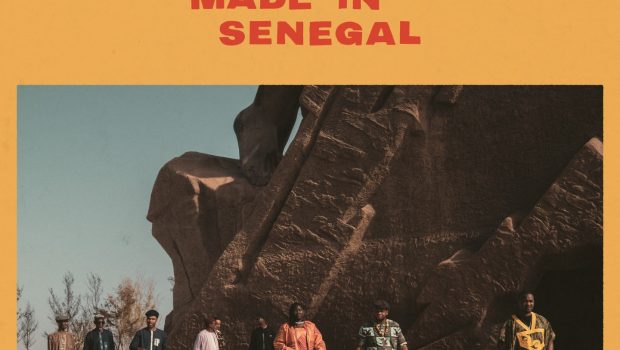
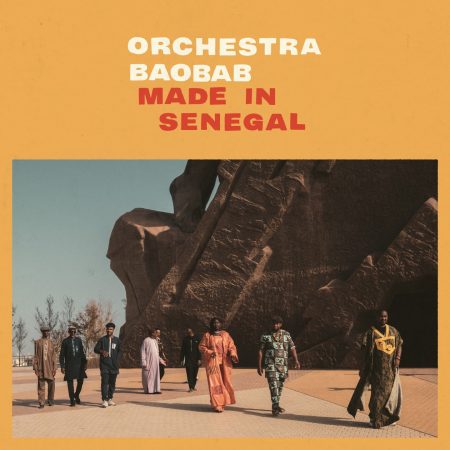
However, the band’s history stretches much further back. Formed in 1970, they released 20 albums before disbanding in 1987. Since their 2001 reformation, the pace with which they have released new music has been much slower with ‘Made in Senegal’ being their first album since 2017’s ‘Tribute to Ndiouga Dieng’, named after their original vocalist who had passed away the previous year. In the intervening period, six former members of the band have died so the only survivor from the original group is alto-saxophonist and musical director, Seydou Norou “Thierno” Koité. With the vacancies being filled by family members and through personal recommendations, the change in personnel has been seamless and ‘Made in Senegal’ has an elegant and unhurried quality.
The album consists of 12 songs, a combination of new tunes and reimagined classics. It begins with a song composed by their late singer and songwriter Rudi Gomis, a tribute to his grandmother, the one member of his family who supported his musical ambitions. The song draws on the romantic tradition of Casamance Creole poetry, evoking the wind as a messenger of memory and the bond between generations. Zacharia “Papino” Koité’s vocal delivery captures the song’s emotion and affection, saxophonist/trombonist Wilfrid Zinzou adds to a horn section that creates the effect of a refreshing breeze rounded off by guitarist René “Bolero” Sowatche’s relaxed style.
Another Gomis composition, ‘Togne Bakhoul’, is an ode to his wife. With words that translate as “I won’t hurt you again… we will sit together, side by side, talking endlessly, sharing sweet words… I won’t stay out anymore”, he sounds like a repentant rascal and with a song as good as this, it would be hard to resist his blandishments.
‘Tioro Bye Samba’ is a classic Thione Seck song, an upbeat number featuring a soulful vocal from Korka Dieng, the first permanent female singer employed by the band. The sinuous grace of her voice is showcased to excellent effect on ‘Sibo Odia’, a song also notable for horn interplay and a tricksy guitar solo from Sowatche. There is a fluidity to their performances so ‘Souvenir’ can transform gracefully from a slow, reflective tune into a horn propelled dancefloor filler. ‘Wuti Xaliss’ is especially infectious with its scatter fire repetition of its title, set against a relaxed groove.
In fact, ‘Made In Senegal’ in its entirety has an uncommonly chilled vibe. It is easy to imagine listening to it in the sunshine, cradling a rum-based cocktail, swaying gently and occasionally dancing more vigorously. This is a particularly pleasing fantasy to indulge in Autumnal northern England, even more so as your reviewer long ago gave up alcohol. There is a contentedness that radiates from the album, encapsulated in songs like ‘Casamance’ which celebrates the southern Senegalese region that is home to several band members and ‘Baobab 50 Ans’ which marks their fiftieth anniversary with great aplomb.
Despite the flux within their membership, on ‘Made in Senegal’ Orchestra Baobab continue to show a mastery of mood and styles. As Thierno Koité so aptly says, “We are like the tree we are named after. No matter what happens, the baobab stands firm.” Long may they continue.
Orchestra Baobab: Made in Senegal – Out 23 October 2026 (Strut / Madoky Music)

I was editor of the long-running fanzine, Plane Truth, and have subsequently written for a number of publications. While the zine was known for championing the most angular independent sounds, performing in recent years with a community samba percussion band helped to broaden my tastes so that in 2021 I am far more likely to be celebrating an eclectic mix of sounds and enthusing about Made Kuti, Anthony Joseph, Little Simz and the Soul Jazz Cuban compilations as well as Pom Poko and Richard Dawson.