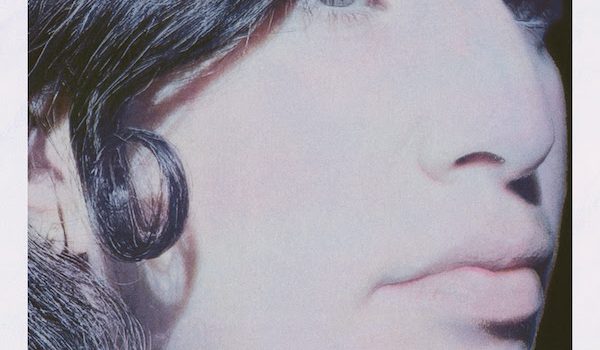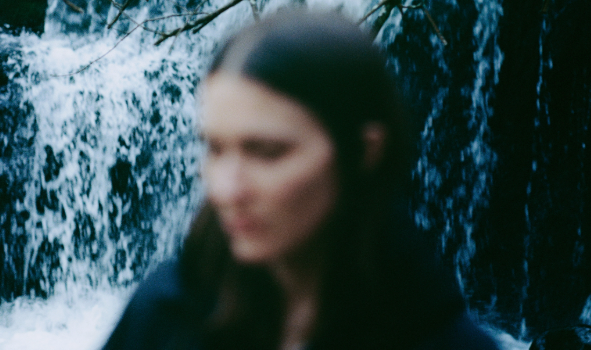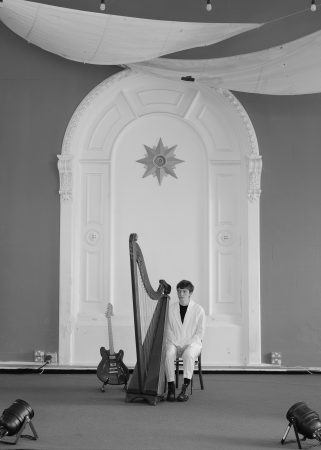
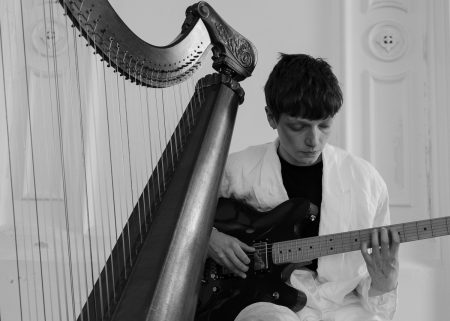
Cerys Hafana photo by Abby Poulson
A gorgeous and inventive album, Cerys Hafana’s ‘Angel’ will be released on 26 September 2025 via Glitterbeat’s tak:til label imprint. It displays Hafana’s mastery of the Welsh triple harp and sees them joined by a trio of musicians (Ursula Harrison – double bass, Amie Huckstep – alto saxophone and Lisa Martin -drums) who add ideal embellishments to the songs. Prior to the record’s release and some extensive touring, Hafana took the time to discuss the album and their approach to musicmaking.
- Could you start by telling us about your early experiences of listening to music and whether there was a specific moment when you thought you wanted to be a musician.
My dad played a lot of music around the house when I was growing up. A lot of rock and americana but I remember Mozart’s Requiem being played on repeat too. Maybe my earliest memory of being excited about music was listening to a song by Josh Ritter in the back of the van on our way somewhere and feeling surprisingly moved by the rhythm and feel of the music. I listened to a lot of one album by Laura Veirs, and I think the influence of that rears its head in unexpected and unconscious ways in my music today.
I think the first time I consciously decided I wanted to be a musician was listening to Chwedl y Ddwy Ddraig (Tale of Two Dragons) by Calan. It was a completely different approach to folk music compared to how I’d been taught, and I remember deciding that I wanted to play Welsh music in a more contemporary style like them.
- Could you describe the process of recording ‘Angel’. I understand that you had not previously worked with the trio of accompanying musicians. How did you come to choose them? Was it a case of them fulfilling your vision for the record or did they bring things that surprised you?
I knew I wanted saxophone, double bass and drums quite a while before finding the musicians, and it took ages to find people that felt like the right fit without actually meeting them in-person. The way I write for other people tends to be a slightly chaotic mix between very specific, notated ideas and total free-reign, and I’m lucky I found musicians who were able to move between those two very different ways to playing with ease.
I’ve been friends with Amie the saxophonist for a few years, and was familiar with her work in her alt-folk band Lacuna (who are based in Glasgow). I also knew that she was in the middle of a masters in music and ecology, with a particular focus on birdsong, which felt very appropriate for the themes of this album.
I hadn’t met Lisa before but was aware of her solo project, Aderyn. She was recommended to me by a producer we’ve both worked with. This project is quite different from her usual work, but I think she did an amazing job of adapting (especially considering she had basically no rehearsal time with us). She also just brought a really nice energy to the studio.
Ursula was recommended to me by Huw Warren, the Welsh jazz pianist. Apparently, we had crossed paths at one of my gigs at Focus Wales in Wrexham, but embarrassingly I had completely forgotten this. She’s an incredible musician, and actually went and won the BBC Young Jazz Musician competition a few days after I asked if she’d be part of the album. I have no jazz training at all, but am often thieving and appropriating small bits of jazz techniques, so it was cool to work with someone who’s much more immersed in that world (although the end result is still not very jazzy at all).
- What was the process for choosing the tracks on ‘Angel’ which is a mix of traditional and original compositions? Did you have original pieces which suggested complementary traditional songs or did traditional numbers inspire your own compositions?
I had a couple of instrumental pieces knocking around for a few years that I couldn’t decide what to do with. And then I found a song in the Welsh National Library’s online Ballads Database about a man who hears a bird (or maybe an angel) singing in the forest which makes him fall asleep for 350 years. The song really appealed to me on lots of levels – I’d been looking for folk songs involving supernatural encounters / angels, and liked that this song had a very clear narrative arc that was reminiscent of a folk tale. I was also struck by the emotion and sense of horror at the point in the song where the man realises he’s been gone for 350 years.
It was a very long song so I decided to split it in two and build an album up around those two halves (which pretty much bookend the album). Some of the pieces I reverse-engineered to fit into the story, and others I wrote once I knew what the concept / shape was going to be. In general I wanted all the pieces to have some sort of trancey quality, be that in a quiet, reflective way or a more rhythmic, dance-y way.
- The lyrical themes on the songs ‘Angel’ and ‘Helynt Ryfeddol’ are broadly similar. Could you talk about the thought process behind their inclusion? (I should add that they are both fantastic songs.)
(Thank you! And I’ve realised I just answered this in the preceding question, sorry!)
They’re the same song split in two, which I then wrote original melodies for. I can’t remember if the original manuscript either didn’t specify which melody the words should be sung to, or if I just couldn’t find the melody that was specified (I’m not a very thorough researcher). They’re in a very common metre so could be sung to many Welsh folk song melodies, and I spent a long time trying them out on various different tunes, but in the end it seemed more appropriate to write my own.
- When did you start playing the harp and are there any particular harpists who have inspired your approach to playing the instrument?
I started having harp lessons when I was eight, with Rhiain Bebb. She encouraged me to start playing the triple harp when I was 11, which became my main focus harp-wise. I went to a few workshops with Siân James when I was very young, and then had some lessons with her when I was a bit older. She’s very creative and ambitious with the way that she writes and arranges for harp and voice, and has probably inspired me a lot. I think Llio Rhydderch would be the other main inspiration. She’s so deeply connected to the triple harp tradition and so committed to her own creative expression and composition process, and isn’t afraid of doing something new / different.
- I have read about your use of blu-tac on the harp strings to produce a woody, muted sound. Are there any other experimental techniques you have tried (successfully or unsuccessfully) to alter the sound from your instrument?
The other one I enjoy is weaving paper through the strings to create a buzzy, distorted sound. I used that a bit on Edyf (on the track Y Môr o Wydr). I’ve been enjoying using harmonics much more on this album (where you stop the string at its halfway point and get the octave harmonic). It’s not a very groundbreaking technique if you’re a classically trained harpist but feels adventurous if you’re from the folk world.
I did try building some sort of contraption to weave lots of different things (beads and buttons and various bits of fabric) through the strings at uni, but it wasn’t a huge success.
- Is the harp a difficult instrument to take on tour? Are there any issues with ensuring that the sound is right, especially in venues that are more used to accommodating a conventional guitar, bass and drums line-up?
Yes, it’s a nightmare. It’s not the end of the world if I’m touring in a van, although finding suitable parking spaces and venues with lots of stairs is the bane of my life.
I had a special triple harp commissioned at the beginning of the year specially for taking on aeroplanes, and have flown with it a few times in the last few months. I’ve almost been stranded with it in Portugal and Austria, because the airline can’t decide what their own rules are regarding heavy musical instruments, which is quite frustrating. So far it’s been an experience I wouldn’t wish on my worst enemies (although I guess I should be grateful the harp is at least still intact).
I have quite a good pick-up installed in my harp which makes life so much easier than battling with external microphones and feedback, but I guess it’s still a slightly unusual instrument to work with and probably a bit baffling if you’re used to dealing with electric guitars.
- You have quite a lot of tour dates lined up over the coming months? What can audiences expect? Are the musicians who played on the album coming with you? Do you have a settled set list or is it more fluid?
I will have some of the musicians from the album with me for most of the tour, which is exciting. Usually my set list is pretty fluid but I guess now that I have other musicians involved I’ll have to be a bit more consistent. It has been fun going through my back-catalogue and trying to figure out how certain pieces might work with slightly different instrumentation.
- What are your future plans?
I’m mostly focussed on the next few months of touring at the moment. Hopefully next year I’ll have more time to get back to composing. There are usually about 7 different directions that I’d like to go in at any given moment, so it would be silly to specify one of them now. I’ve been spending some time exploring avenues that don’t involve the harp (maybe because I’ve been so scarred by extensive touring and travelling with it), and more collaborative projects, because everything I’ve done up until now have been pretty solo endeavours.
I also composed the music for a National Dance Company of Wales production which will be touring in October and November, and did the music for a few films, so I’m excited to see where all those things lead.
- What is the best place for staying up to date with your activities?
In theory I have a mailing list but I haven’t figured out how to use it yet, so following me on Bandcamp is probably the next best thing. I’m also on Facebook and Instagram of course.
Cerys Hafana is performing at various festivals before touring in October and can be seen on the following dates:
Fri 22 Aug – Between The Trees Festival, Candleston Woods, Merthyr Mawr, South Wales
Sun 24 Aug – Shambala Festival, Northamptonshire
Sun 31 Aug – Moseley Folk Festival, Birmingham
Sat 20 Sep – Hidden Notes Festival, Stroud
Thu 2 Oct – St George’s, Bristol
Fri 3 Oct – Music Room @ Liverpool Philharmonic Hall/ Cerddoriaeth Cymru: A Celebration of Welsh Folk Music, with 9Bach, Cerys Hafana and VRi
Sat 4 Oct – The Gate, Cardiff
Sun 5 Oct – All Saints’ Church, Langport
Wed 8 Oct – Band on the Wall, Manchester
Thu 9 Oct – Cobalt Studio, Newcastle
Fri 10 Oct – The Glad Cafe, Glasgow
Sat 11 Oct – Firth Hall, Sheffield
Sun 12 Oct – St Matthias Church, London
Thu 16 Oct – KCM Church, Falmouth
Fri 17 Oct – Barrelhouse, Totnes
Sat 18 Oct – Wiltshire Music Centre, Bradford on Avon
Tue 21 Oct – Aberystwyth Arts Centre, Aberystwyth
Fri 24 Oct – Tŷ Siamas, Dolgellau
Sat 25 Oct – Neuadd Ogwen, Bethesda

I was editor of the long-running fanzine, Plane Truth, and have subsequently written for a number of publications. While the zine was known for championing the most angular independent sounds, performing in recent years with a community samba percussion band helped to broaden my tastes so that in 2021 I am far more likely to be celebrating an eclectic mix of sounds and enthusing about Made Kuti, Anthony Joseph, Little Simz and the Soul Jazz Cuban compilations as well as Pom Poko and Richard Dawson.