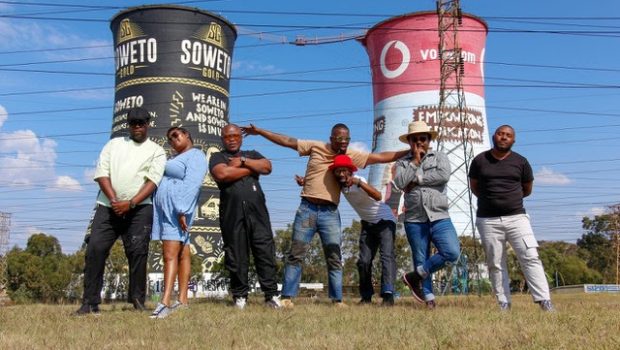
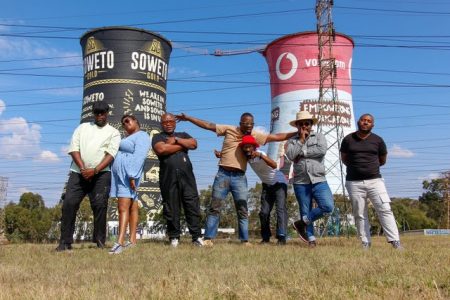
 Soweto ensemble BCUC (which stands for Bantu Continua Uhuru Consciousness) make politically conscious, rhythm-heavy, life-affirming music which exudes positivity. Their fifth album, ‘The Road Is Never Easy’, is set to be released on 3 April 2026 via Outhere Records and will be followed by extensive touring.
Within 24 hours of emailing some questions to the band via their publicist, I had received these replies from Jovi discussing their working methods, live shows and the political situation in South Africa. The speed of response is unprecedented and is indicative of the energy with which they approach being a band.
Please could you tell me about how BCUC got together. Have there been any changes in the line-up over the years?
BCUC was formed in 2003, in the beginning it was a movement of rappers, poets, musicians, photographers and fashionistas we were probably around 10 or eleven.
Your songs have a spontaneous feel. How do you go about writing them? Is there any one person who usually comes up with the idea? Do you start with a lyric or a rhythm? Is there a lot of improvisation involved?
We usually improvise and then the idea forms. We then either freestyle or start writing but because the idea is still fresh we just put it in the can as a track that will become a jam on stage or a fully developed song.
Do new songs start their life at gigs and then you work out how to record them or the other way around?
There is no one way of doing things. First of all, we are a live band that specialises in playing amazing shows. So, some songs start at the rehearsal or during sound check from the inspiration that either the bassist or one of the drummers spark through a solo warmup or freestyle. We are just a tight knit band that strives to anticipate each other’s moods and express it in sound and a collective vibe because of our shared love and passion for music.
‘The Road Is Never Easy’ has more songs than your previous albums and the tracks are much shorter than before. Was it a deliberate choice to write shorter songs this time?
It was an experimental choice that stemmed from the mixture of what the label suggested and what we always wanted to try as an amendment from our norm.
Could you tell me about the recording process for the new album. What were the reasons for recording it in Munich?
This album came from a desire to do something different with a new team and take in more external input and suggestions to see what will come out. It was so amazing to see what can come out if we record from the world war bunker.
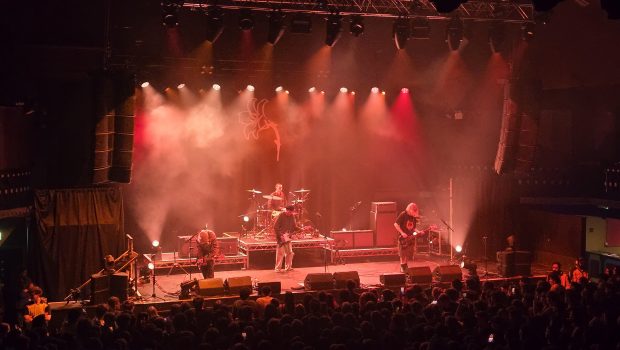
You have a lot of gigs lined up in Britain over the next few months. How do you go about performing live? Do you perform the same songs each night or make regular changes to the set? Is there a lot of improvisation when you are performing live?
We always work on the set as a vehicle for the evolution of our sound. For example, if you attend one of our shows in the beginning of the tour, then ten shows later the set would have changed. Either the set list, the feel and the journey of the set would have shifted. We never know what, where or how that will happen but we are always pushing for the shift and a cohesive vibe to what the set ends up becoming. We always have more songs than the set requires, it is almost like a football or F1 team, we have different set ups for different situations. We then dress it up with improvisations and take sonic risks for the thrill, also because we don’t want to sound like any other band. We aim to always improve from the last time you saw us.
Your lyrics paint a picture of a South Africa that has not changed or progressed enough since the joyful ending of apartheid. Why do you think change has been so slow to come? Are you optimistic that the future will be better?
Because not much has changed for the people. The people are still poor, the people are still marginalised and there is still no plan to make South African people’s lives better. We the people are still living in the same circumstances but the segregation we are facing now is classism rather than segregation by skin colour. We have hope for the better future thus we are still in a quest to free the minds of the people. We will never give up the dream of a South Africa where the people will live from their sweat, blood and tears instead of the welfare state that erodes the people’s dignity instead of being blackmailed with promises.
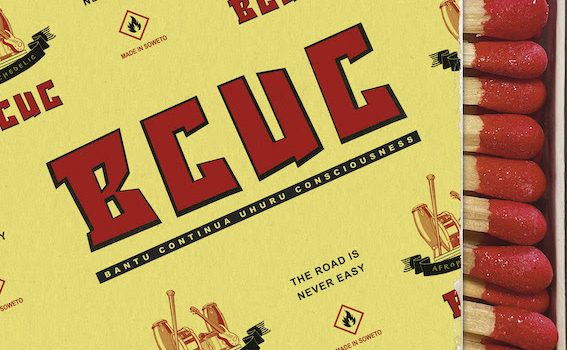
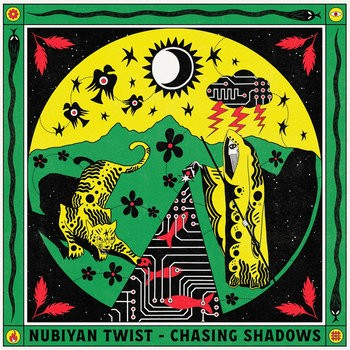
Could you tell us about the artwork for the album and why matches feature.
The matches is the spark to the fire in the consciousness of the people and to warm the souls that our music will interact with.
Are there other bands in Soweto or that you have met while touring that you feel a kinship with and would like to recommend to our readers?
There is a band from Soweto called Shameless Band, then there’s Ladameblanche a band from Cuba that we have a song with and lastly Nanabenz du Togo.
After you have completed your tour, what are your future plans?
Our future plans are wishes: we wish to do a series of collaborative residencies either with an orchestra, or a choir or even a drum ensemble from outside of South Africa.
All these wishes sound exciting and it would be great to see them realised. More immediately, they will be performing the following dates:
Fri 10 April – Brudenell Social Club, Leeds
Sat 11 April – Neuadd Ogwen, Bethesda
Wed 15 April – Esquires, Bedford
Fri 17 April – Bossaphonik, Oxford
Wed 22 April – The Jam Jar, Bristol
Thu 23 April – The Jam Jar, Bristol
Fri 24 April – Dome, Brighton
Sat 25 April – Barbican, London
Later in the year, they will be coming to Manchester to take part in the Green Island Festival on Sat 25 July.

I was editor of the long-running fanzine, Plane Truth, and have subsequently written for a number of publications. While the zine was known for championing the most angular independent sounds, performing in recent years with a community samba percussion band helped to broaden my tastes so that in 2021 I am far more likely to be celebrating an eclectic mix of sounds and enthusing about Made Kuti, Anthony Joseph, Little Simz and the Soul Jazz Cuban compilations as well as Pom Poko and Richard Dawson.